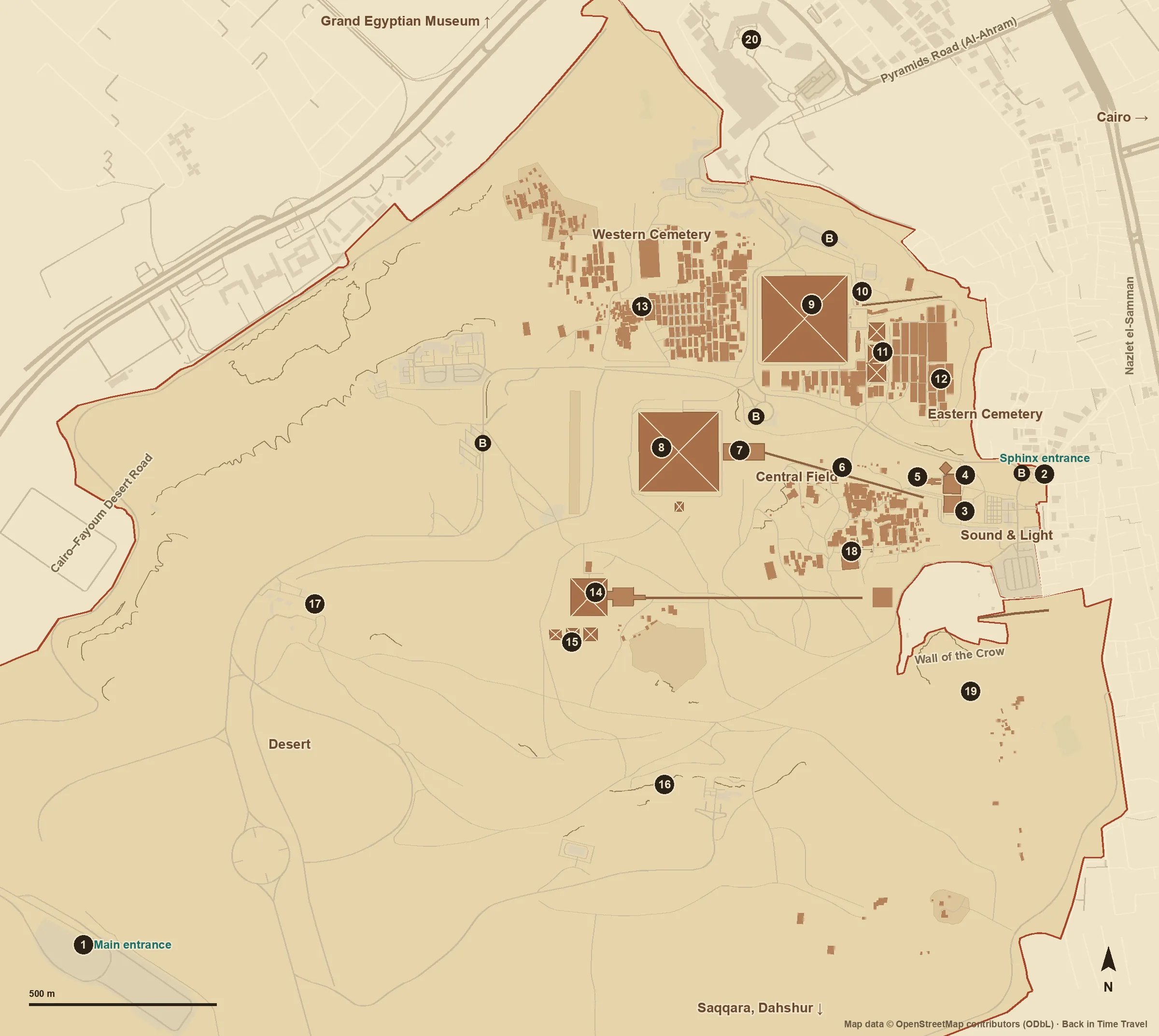
Herodotus wrote of forced labour, and the image of slaves under the whip lasted into the films of the 20th century. Since 1988 Mark Lehner’s team has been excavating south of the Sphinx a town that belongs to Khafre and Menkaure: long dormitories for crews, bakeries with bread moulds, granaries, administrative buildings, overseers’ houses and bones of cattle, sheep and goats in quantities that point to regular meat rations. On the plateau above lie the tombs of the builders and overseers, with titles, names and the names of their crews.
Evidence / source: Ancient Egypt Research Associates (Mark Lehner) · The Lost City of the Pyramid BuildersThose who are buried, eat beef and have their names written in a tomb are not slaves in the ancient sense. The pyramids were built by Egyptians whom the state drew from the villages for months, fed and organised in crews with names of their own, together with craftsmen who lived on site permanently. The labour was an obligation, but it was paid, in bread, beer and meat.
What the evidence cannot establish on its own
The town is dated to Khafre and Menkaure; the settlement of Khufu’s builders has not yet been found and probably lay further north under the modern town. How many people worked at once is an estimate: Lehner reckons with a few thousand permanently and considerably more during the inundation.