← Back to the time atlas

Türkiye · Ionia · Roman world

Ephesus.
A city on the move.

Today, paths lead between walls and columns. These once formed part of a harbour city. Here, urban history and landscape can be read together.

Selection: 300 BCE–800 CE

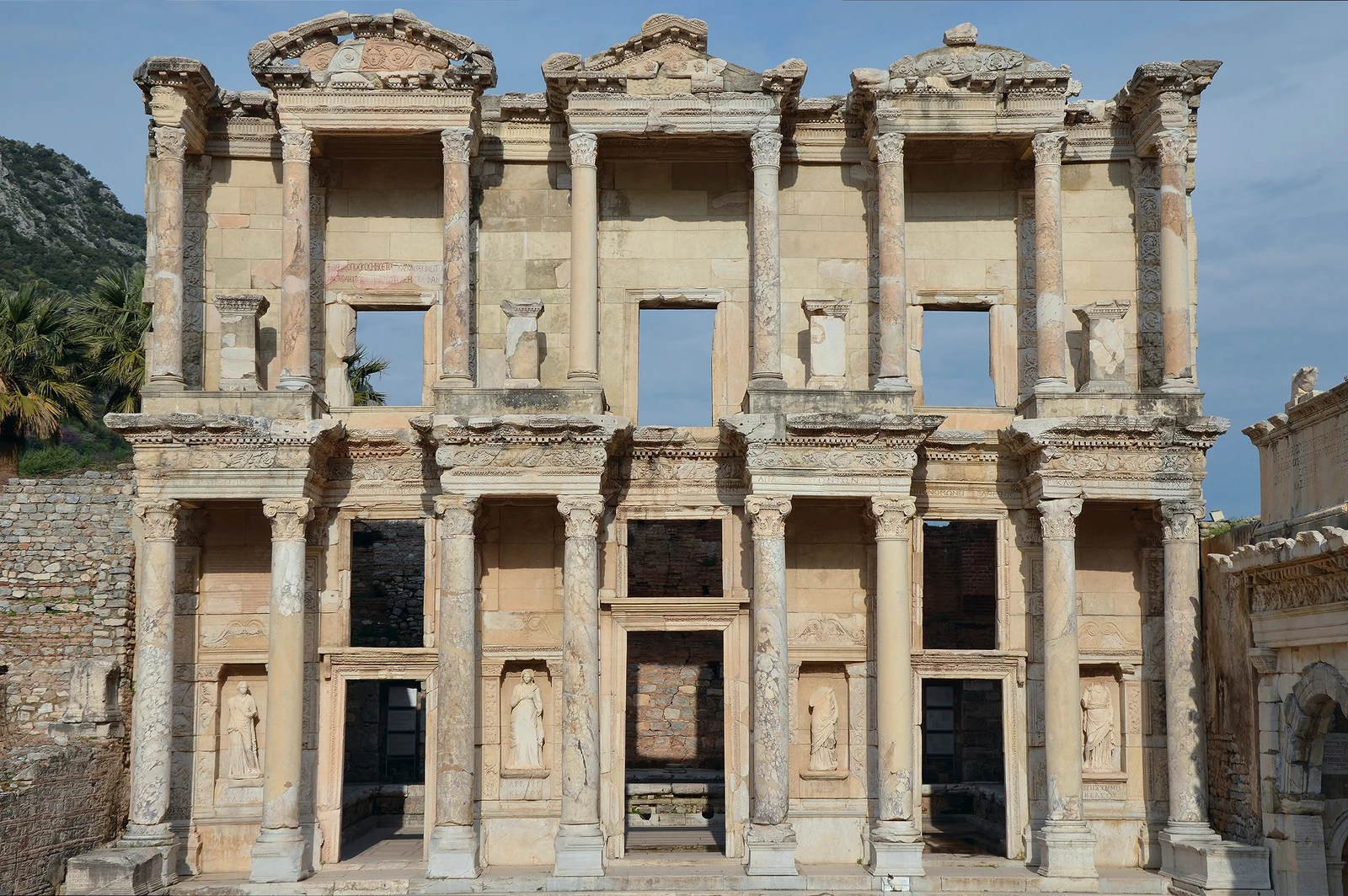
The two-storey façade of the Library of Celsus in Ephesus, with columns, ornate pediments and statue niches.
The façade of the Library of Celsus in Ephesus, Turkey, photographed on 8 April 2015. Carole Raddato · CC BY-SA 2.0
The city and the sea.

Sedimentation shifted the coastline around Ephesus. City and harbour locations moved more than once. Today’s distance from the sea cannot be explained by the ancient city plan alone. Source: UNESCO · Ephesus

Through the centuries

No place stands still.

Choose a period. See how the story changes over time.

Hellenistic period

A new framework for the city.

The Ephesus visited today has a Hellenistic urban framework, altered by later generations. Its Roman monuments belong to a longer settlement history. Surviving walls do not all represent one phase.

Source

Hellenistic period

A new framework for the city.

The Ephesus visited today has a Hellenistic urban framework, altered by later generations. Its Roman monuments belong to a longer settlement history. Surviving walls do not all represent one phase.

Source: UNESCO · Ephesus

Look closer

The façade is also a work of research.

The Celsus Library was re-erected in 1970–1978 using ancient parts and additional materials. Its familiar appearance also owes much to modern archaeological work.

Re-erected does not mean freely invented. It means surviving elements were studied, assigned and supplemented. A present-day photograph and an ancient condition nevertheless remain different things.

Source: Österreichische Akademie der Wissenschaften · Conservation of the Celsus Library
Think about the landscape

When looking at a harbour street, ask about the water now missing. Geoarchaeological research examines how the bay, river deposits and settlement spaces changed in relation to one another.

Source: Österreichisches Archäologisches Institut · Bio-Geoarchive in Ephesos

Reading the place

Beneath the surface.

Buildings and finds reveal more when we consider their context. These close readings connect the evidence with questions to take on a visit.

01

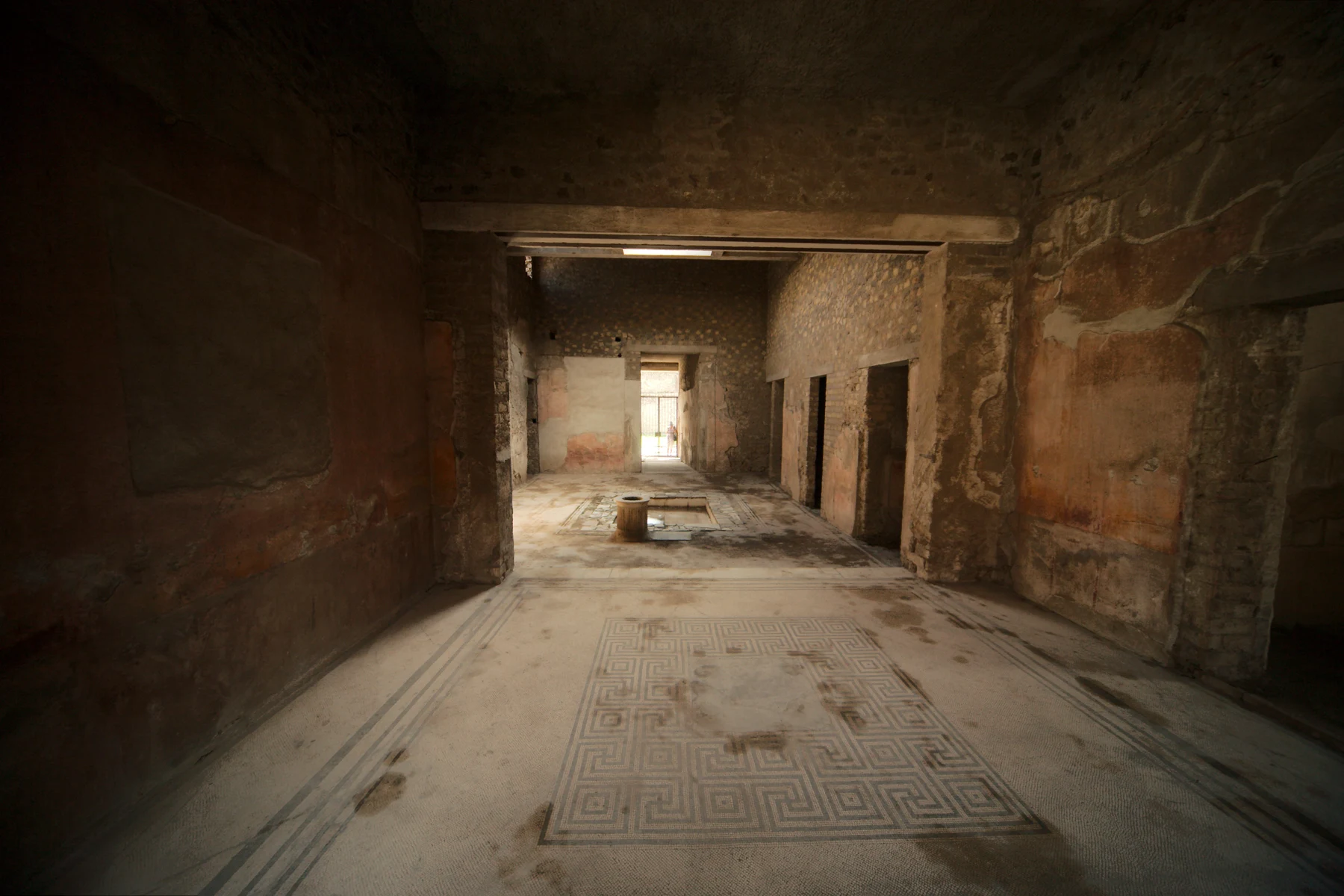
Comfort behind the walls.

The Terrace Houses reveal courtyards, fountains and heating systems alongside expensive decoration. These remains also open a window onto the technical demands of domestic life.

Evidence / source: Ministry of Culture and Tourism · Terrace Houses

Read a room in two ways: what was meant to be seen, and what had to function? Wall coverings and mosaics contribute to appearance; water, heat and access pose different demands. Together they raise the question of how a house operated. This also helps comparison with Pompeii: a familiar courtyard does not imply an identical history or use.

What the evidence cannot establish on its own

Luxurious homes do not represent the average experience of the whole city. Even a well-preserved room cannot by itself reveal how many people lived there or who performed its daily work.
02

The harbour is also beneath our feet.

Geoarchaeology at Ephesus uses sediment cores and pollen to investigate changing landscapes. River deposits gradually filled the former bay. The research also links the acceleration from Hellenistic times with human interventions in the hinterland.

Evidence / source: Österreichisches Archäologisches Institut · Bio-Geoarchive in Ephesos

A harbour street seems to end on dry land in a modern photograph. Landscape history turns this into a question about time: where was the water, and how could it be reached? Buildings and shorelines change at different speeds. A map using today’s coast is an orientation aid, not a complete reconstruction of the ancient setting.

What the evidence cannot establish on its own

Dating requires several kinds of evidence. A single sediment layer explains neither the full history of a river nor automatically the moment when one particular harbour became unusable.

Plan a visit

Explore the Ephesus that interests you.

The official museum website explains the site and its access points. If homes interest you, check explicitly whether a visit includes the Terrace Houses.

The Terrace Houses have a separate entrance. Check whether your ticket or tour includes their admission and which areas are actually visited. Pickup from Kuşadası and a guided walk on site are different services.

Official visiting information ↗Türkiye · Ministry of Culture and TourismGuided tours on GetYourGuide ↗Compare language, transport, admission and the actual itinerary in each offer.

Affiliate link: we may receive a commission when you book through GetYourGuide. The historical interpretation remains independent.

Visiting sources checked on 24 September 2026. Prices and availability are provided by the operator.

Continue your journey

See this time on the map →
Sources and context

These texts combine published research with editorial explanation. Some dates are approximate. Photographs show documented surviving conditions. Specialist archaeological review is still pending.

  1. Source: UNESCO · Ephesus
  2. Source: Türkisches Kulturministerium · Efes Örenyeri-Yamaçevler
  3. Source: Österreichische Akademie der Wissenschaften · Conservation of the Celsus Library
  4. Source: Türkisches Kulturministerium · Efes Örenyeri
  5. Source: Österreichisches Archäologisches Institut · Bio-Geoarchive in Ephesos
Images and usage rights

The façade of the Library of Celsus in Ephesus, Turkey, photographed on 8 April 2015. Carole Raddato / Wikimedia Commons · CC BY-SA 2.0. Resized to 1600 pixels wide and converted to WebP; no cropping or content alterations. Framing varies by screen. Derived photograph under the same licence.

Barlow OFL · Manrope OFL