Acropolis Map: Plan of the Rock
Our own plan of the Acropolis with 16 highlights, both entrances, the south slope, the Acropolis Museum and the metro station. Tap a number for details, choose a route or print the map for your visit.
Map of the Acropolis of Athens
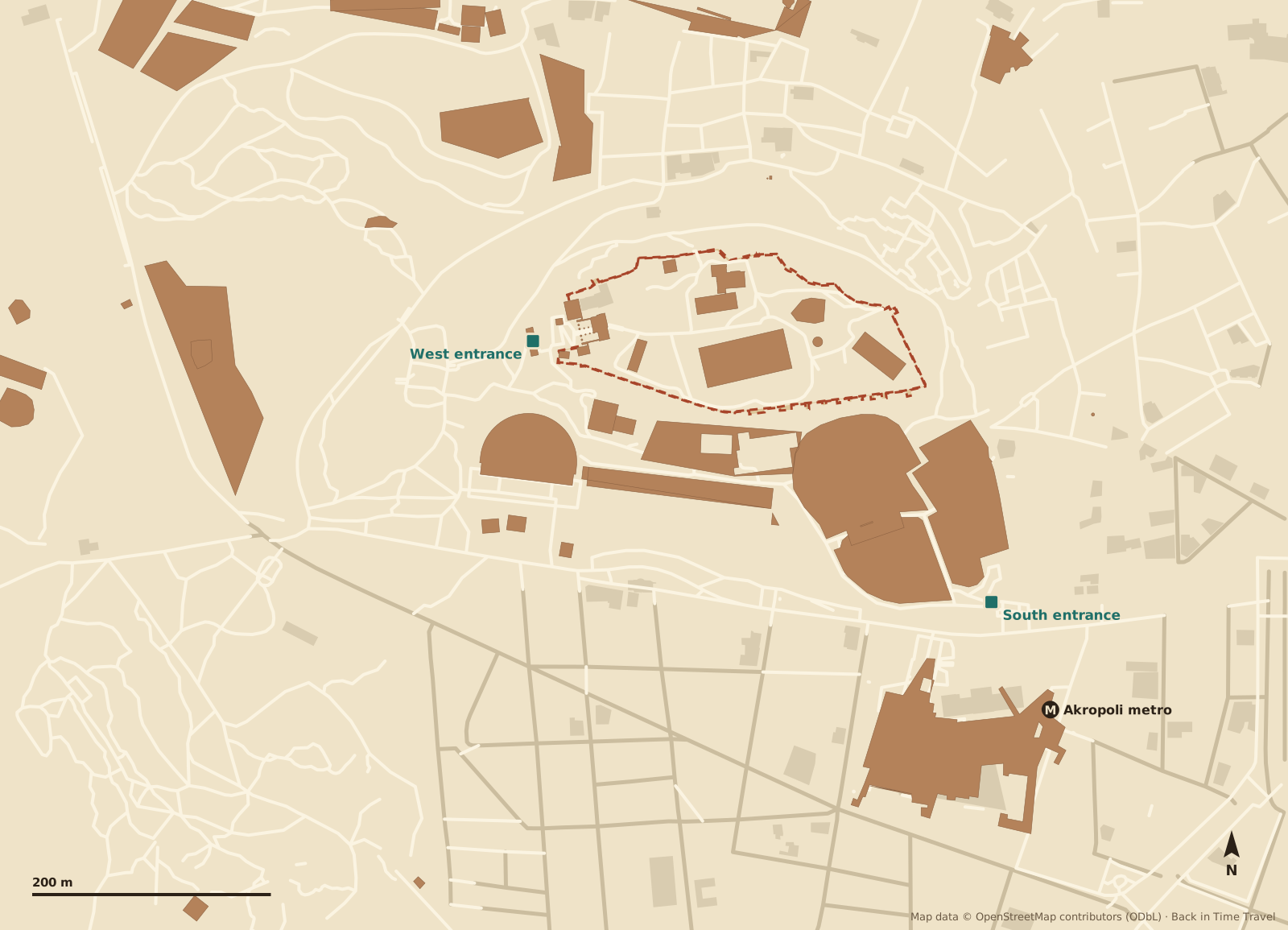
Map data © OpenStreetMap contributors, ODbL. Drawn by Back in Time Travel, data as of 25 September 2026. The map is a guide; paths and barriers on the rock change with restoration work.
The 16 highlights on the map
The numbers match the map. The order follows the walk from the west entrance across the plateau and down the south slope.
Beulé Gate and west entrance Entrance
The main entrance: the ramp by the Roman-era Beulé Gate leads up to the Propylaea. This is where the crowds are largest in the morning and late afternoon.
Read more →Propylaea Gateway
The monumental gateway to the sanctuary, built 437–432 BC by Mnesikles. The central hall had a marble coffered ceiling; the Pinakotheke was on the left.
Temple of Athena Nike Temple
The small Ionic temple on the bastion to the right of the Propylaea. It has been dismantled and re-erected several times, most recently in 2010.
Parthenon Temple
The temple of Athena Parthenos, 447–432 BC. The cella has been open since the explosion of 1687; restoration has been under way since 1975. There is no access inside.
Read more →Erechtheion Temple
The temple with the Porch of the Maidens: the six caryatids are copies, five originals are in the Acropolis Museum and one in the British Museum.
Read more →Old Temple of Athena Foundations
Between the Parthenon and the Erechtheion lie the foundations of the archaic temple destroyed by the Persians in 480 BC.
Read more →Site of the Athena Promachos Monument
The nine-metre bronze statue of Athena by Phidias stood here. Only the base cut into the rock survives.
Belvedere Viewpoint
The eastern tip of the rock with the Greek flag. The best view over Plaka, Lycabettus and out to the sea.
Odeon of Herodes Atticus Theatre
The Roman theatre of AD 161 on the south-west slope, today the stage of the Athens Festival. Visible from above; access only during performances.
Stoa of Eumenes Hall
The 163-metre colonnade of the 2nd century BC linked the two theatres as a covered walk for theatre-goers.
Asklepieion Sanctuary
The healing sanctuary of Asklepios on the south slope, founded in 420 BC, with a spring and a dormitory for the sick.
Theatre of Dionysus Theatre
The oldest theatre in the world: the plays of Aeschylus, Sophocles, Euripides and Aristophanes premiered here. The marble seats date from the 4th century BC.
Monument of Thrasyllos Monument
The choregic monument of 320 BC above the theatre, built into a cave, today with the chapel of Panagia Spiliotissa.
South entrance Entrance
The second entrance on Dionysiou Areopagitou, close to Akropoli metro and the museum. From here the path climbs across the south slope.
Read more →Acropolis Museum Museum
The museum at the foot of the rock with the originals of the Parthenon frieze, the caryatids and finds from the slopes. Separate ticket, €20.
Areopagus Rock
The rocky hill opposite the west entrance: seat of Athens’ oldest court and the place where St Paul preached. Free access, slippery, popular at sunset.
Routes across the Acropolis
Three suggestions. Choose a route and its stops are highlighted on the map.
2 hours: the rock
From the west entrance through the Propylaea to the Parthenon and Erechtheion, with the view from the Belvedere, back the same way.
3 hours: rock and south slope
From the south entrance past the Theatre of Dionysus, up via the Asklepieion and the stoa to the plateau, exit to the west.
Half a day with the museum
First the rock, then the Acropolis Museum with the Parthenon originals; the Areopagus for sunset.
Entrances and metro
- West entrance (main entrance)
- Below the Propylaea, up the ramp by the Beulé Gate. Ticket office and checks are at the foot of the rock; about 15 minutes on foot from Monastiraki or Thissio metro.
- South entrance (Dionysiou Areopagitou)
- On the south slope next to the Theatre of Dionysus, three minutes from Akropoli metro and the Acropolis Museum. From here the path climbs across the south slope to the plateau.
- Akropoli metro (line 2)
- Exit Dionysiou Areopagitou; the pedestrian street leads to the south entrance and on to the west entrance.
Prices, opening hours and time slots are in our guide Acropolis tickets and admission.
Where is the Acropolis?
The Acropolis is a limestone rock about 156 metres high in the middle of Athens, between the districts of Plaka, Monastiraki and Koukaki. From Syntagma Square it is a 20-minute walk. Distances from the rock, as the crow flies:
- Athens (Syntagma)
- 1 km
- Piraeus
- 8 km
- Cape Sounion
- 44 km
- Delphi
- 121 km
- Thessaloniki
- 304 km
Frequently asked questions about the Acropolis map
Where is the Acropolis?
The Acropolis is in the centre of Athens, about 0.9 kilometres south-west of Syntagma Square and about 8 kilometres from the port of Piraeus. The nearest metro station is Akropoli (line 2), three minutes from the south entrance.
How big is the Acropolis?
The plateau measures about 300 by 150 metres and rises about 156 metres above sea level. Walking around the rock takes one to two hours, two to three with the south slope.
Is there a printable Acropolis map?
Yes: use the “Print map or save as PDF” button on this page. It prints the map, the highlights and the routes. There are also information boards at the entrances.
Which Acropolis entrance is best?
The south entrance on Dionysiou Areopagitou is only three minutes from Akropoli metro and climbs past the Theatre of Dionysus and the Asklepieion. The west entrance is the main entrance with a direct way to the Propylaea. With a booked time slot you can use either.
Can you go inside the Parthenon?
No. The Parthenon, the Erechtheion and the Propylaea are fenced off; you walk around them. The original sculptures are in the Acropolis Museum.
Is the Acropolis wheelchair accessible?
Partly. A lift on the north side of the rock takes visitors with reduced mobility to the top, where paved paths lead around the monuments. The south slope can be visited with assistance. The lift is arranged through the site administration.