Rome · Italy · Lazio
Colosseum.
The arena of the emperors.
An amphitheatre for 50,000 people, built in eight years and opened in the year 80 with a hundred days of games. Gladiators, animal hunts and executions, then earthquakes, quarrying and a church, until archaeologists lifted the arena floor. Here is everything for your trip: the history of the building, tickets and admission for the Colosseum, the Roman Forum and the Palatine with the rules for arena and underground, and our own map with every entrance.
Vespasian began the Flavian Amphitheatre in 72 on the site of Nero’s palace lake, and his son Titus dedicated it in 80. Gladiators fought here until 438; afterwards the Colosseum served as a quarry, a workshop, a home and a church before becoming the most visited monument in Italy. Together with the historic centre of Rome it has been a UNESCO World Heritage Site since 1980. Source: UNESCO
Four ways into the arena
Understand, plan,
find your way
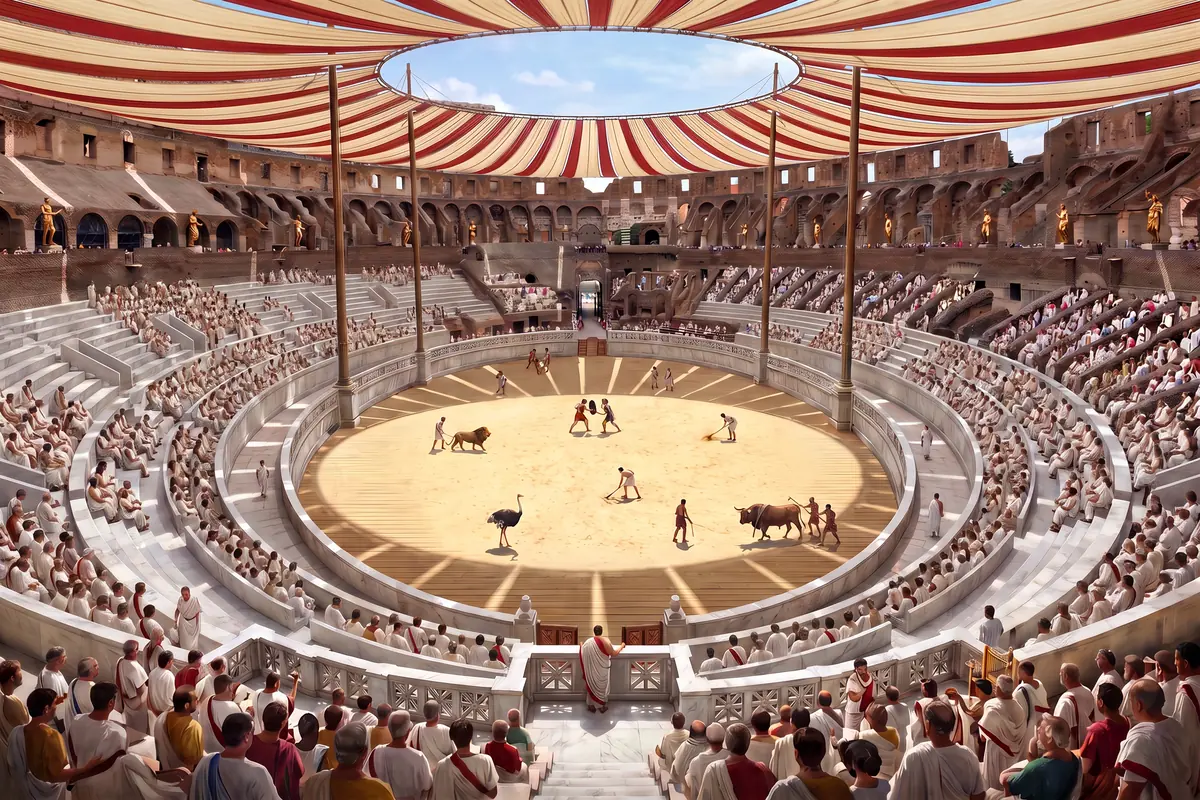 01AI vision80The inaugural gamesFrom the hundred days of games in the year 80 through earthquakes, quarrying and consecration to the excavation of the arena: the time journey from the seating tiers.Start the journey 02Real photo72 ADThe historyFrom Nero’s lake through a hundred days of games to the popes’ quarry: the amphitheatre in four chapters.Read the history 03Checked 25 Sep 20262026Tickets & admission€18 for the Colosseum, Forum and Palatine, timed entry required, arena or underground for €24, free Sundays, Roma Pass, metro.Plan your visit
 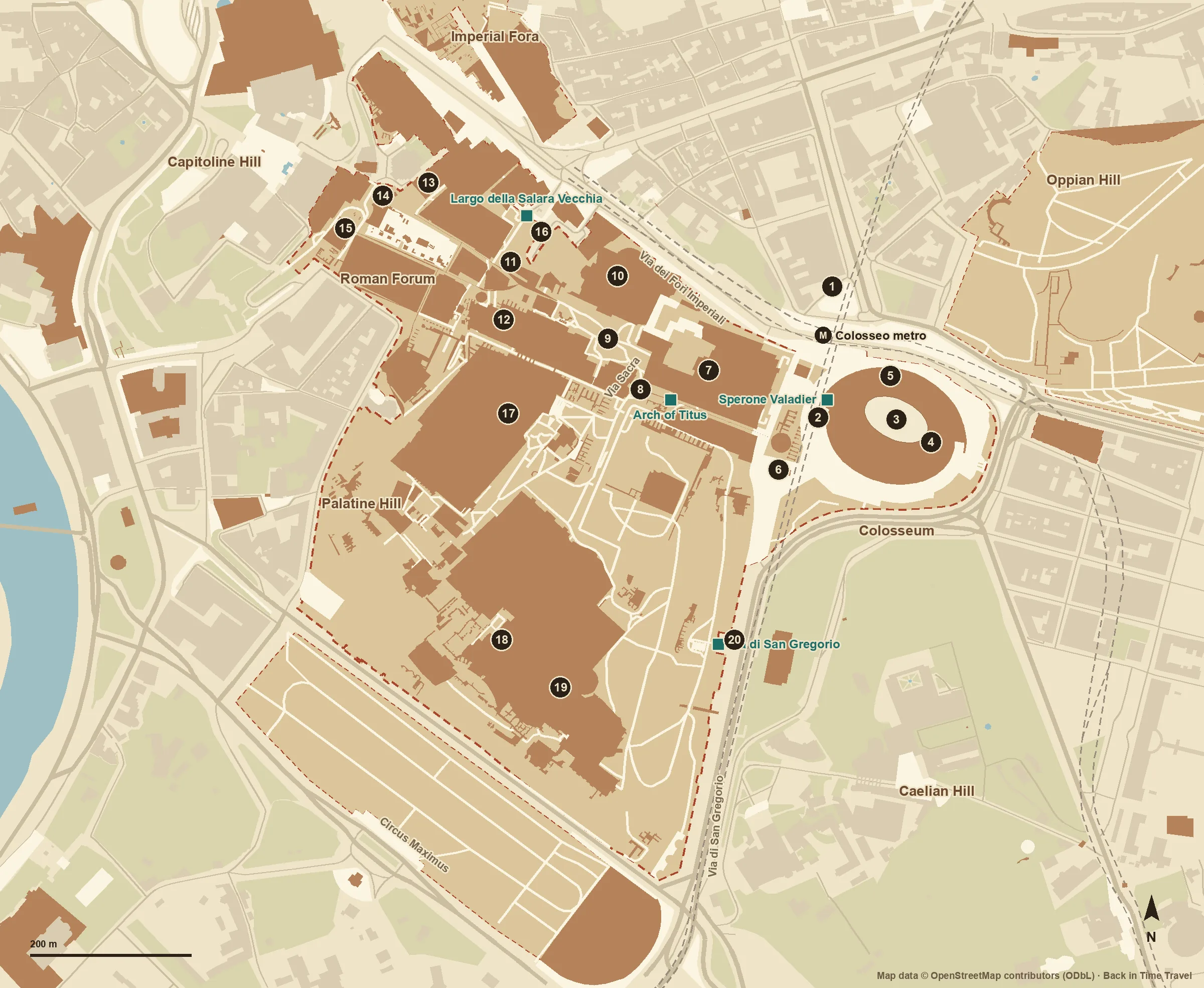 04Own plan20 sitesThe mapPlan of the Colosseum, the Roman Forum and the Palatine with every entrance, ticket office and metro station.Open the map
 The Colosseum in brief
The Colosseum in brief
Where is the Colosseum?
In the centre of Rome on Piazza del Colosseo, at the eastern end of the Roman Forum and the foot of the Palatine. Colosseo station on metro line B is right outside, two stops from Termini.
When was the Colosseum built?
From 72 AD under Vespasian on the grounds of Nero’s Golden House, dedicated in 80 under Titus with a hundred days of games and completed under Domitian. The last gladiatorial games were held in 438.
What can you see today?
The tiers and corridors of the largest amphitheatre of antiquity, the excavated underground with its lifts, a section of reconstructed arena floor and the Colosseum Museum. The ticket includes the Roman Forum and the Palatine with the imperial palaces.
How long do you need?
75 to 90 minutes inside the Colosseum depending on the ticket, plus two to three hours for the Forum and the Palatine. Half a day in all. Our map has routes for both.
Looking beyond Rome
At the same
time, elsewhere.
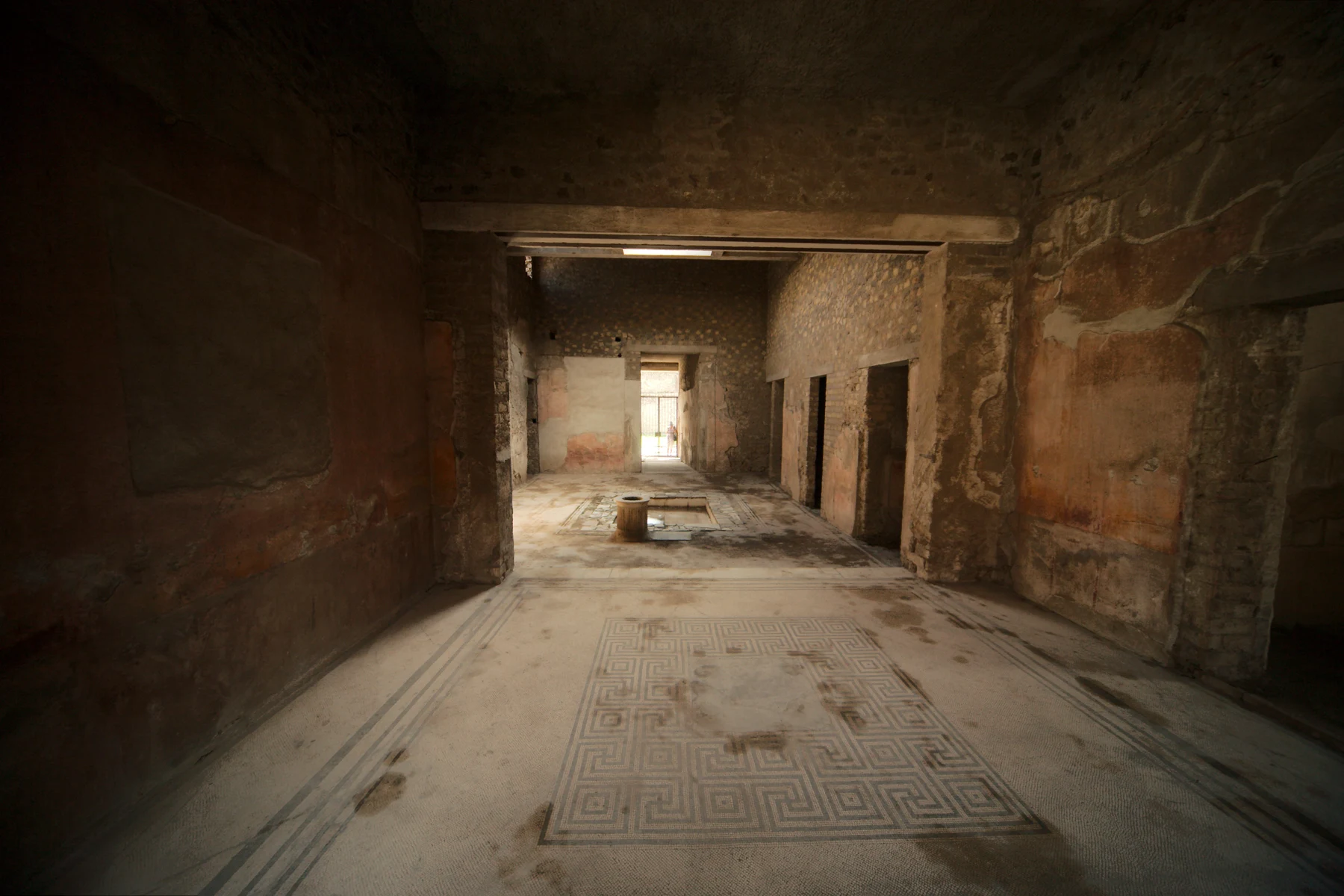
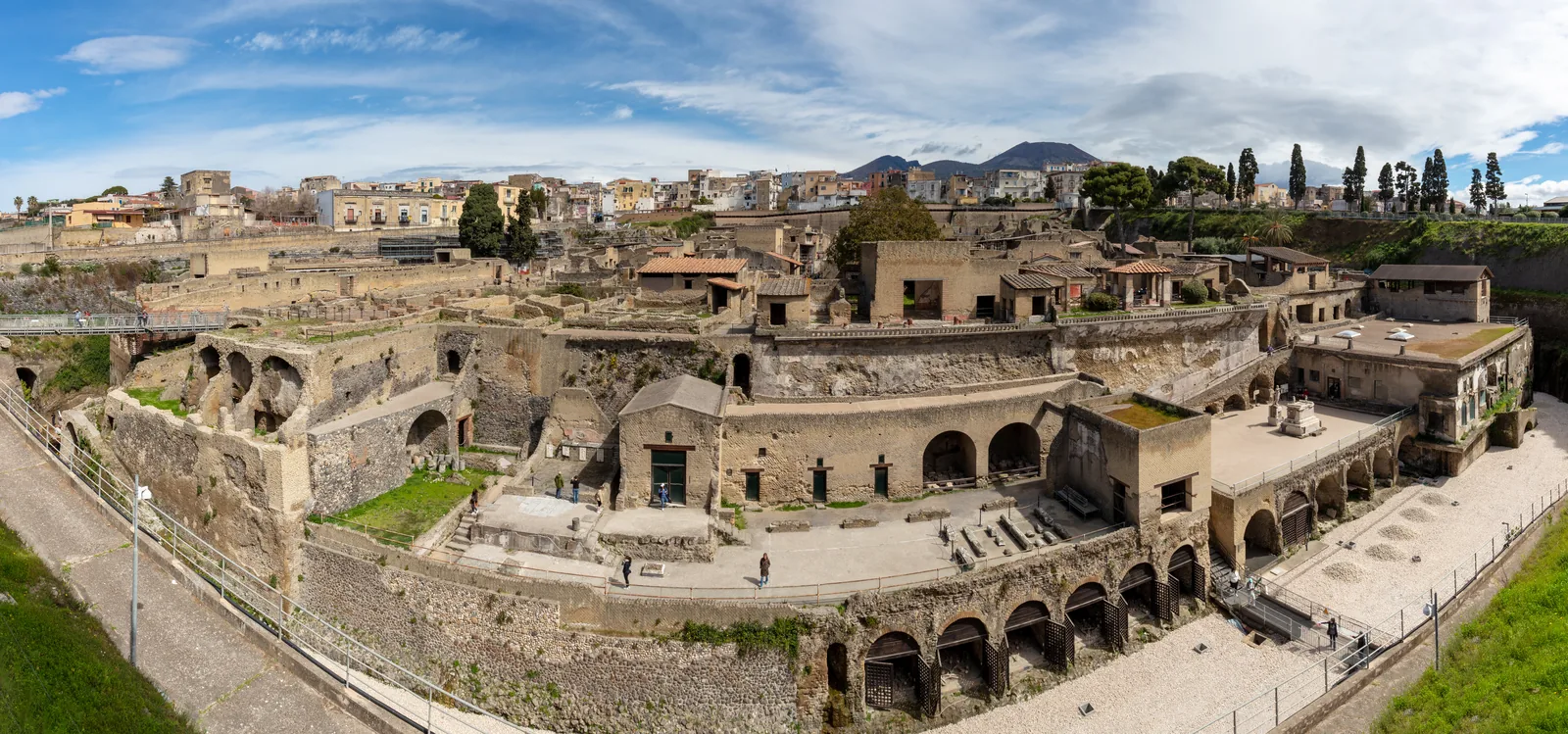
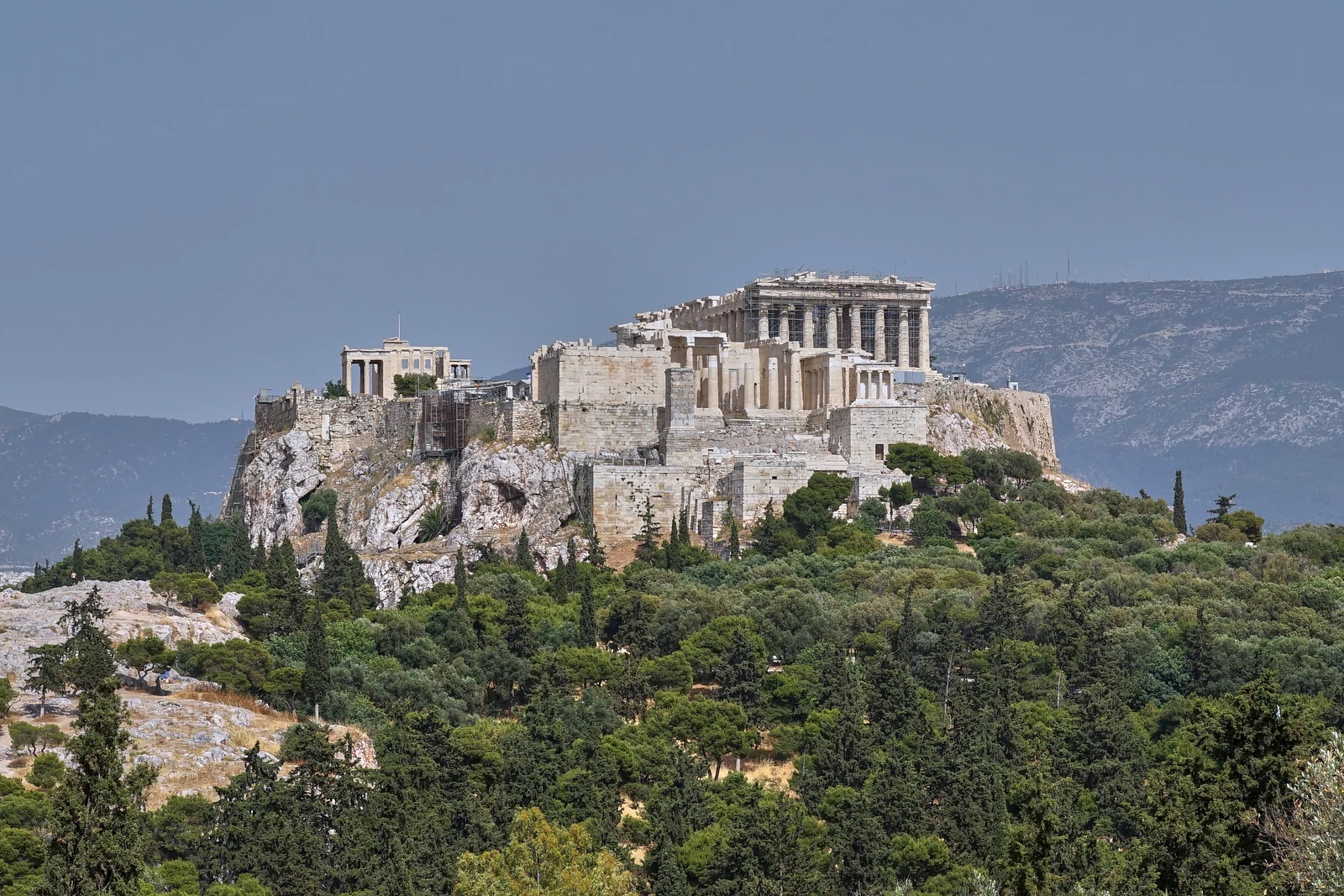
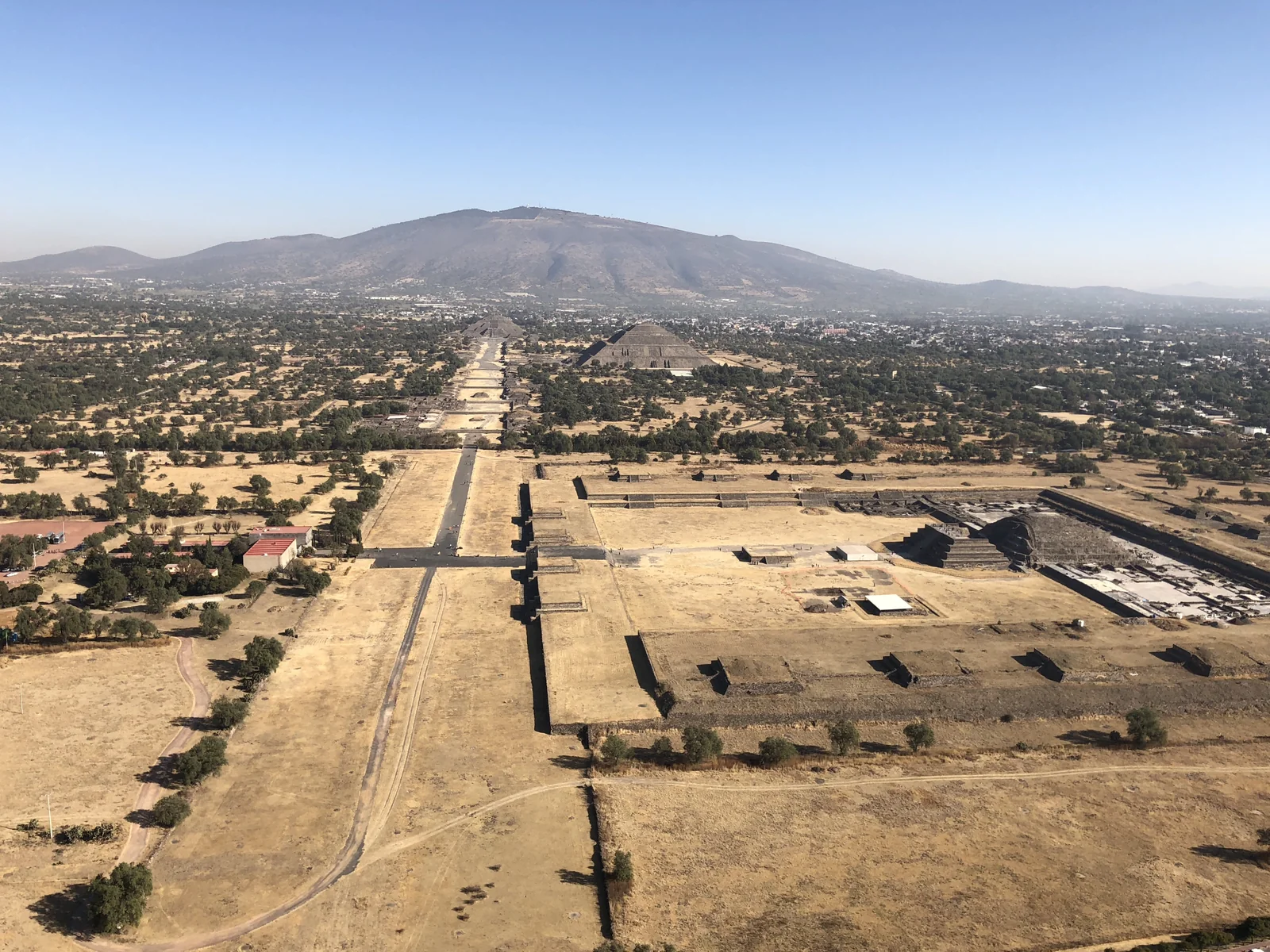
When Titus opened the games in the year 80, Pompeii had lain under the ash for a year, the Acropolis had stood for 350 years and Teotihuacan was laying out its great avenue. Drag the marker and discover five selected places.
- 100 BC – 79 AD A city still inhabited
- 600 BC – 90 BC Before Rome
- 89 BC – 61 AD Roman municipium
- 62 AD – 78 AD After the earthquake
- 79 AD – 79 AD The destruction
- 500 BC – 200 BC The Forum of the Republic
- 199 BC – 1 BC Villas on the Palatine
- 1 AD – 79 AD Nero’s lake in the valley
- 80 AD – 437 AD The amphitheatre in use
- 438 AD – 599 AD Last games
- 600 AD – 1348 AD Fortress, workshop, quarry
- 1349 AD – 1500 AD After the earthquake of 1349
- 600 BC – 481 BC Before the Parthenon
- 480 BC – 448 BC After the Persian destruction
- 447 BC – 433 BC A monument takes shape
- 432 BC – 399 AD The Classical ensemble
- 400 AD – 1000 AD New uses, the same rock
- 300 BC – 1 BC A Hellenistic framework
- 1 AD – 149 AD Roman living spaces
- 150 AD – 269 AD The age of the library
- 270 AD – 800 AD A building changes its role
- 1 AD – 149 AD The city grows
- 150 AD – 249 AD An axis for the city
- 250 AD – 599 AD Life between the monuments
- 600 AD – 700 AD A centre in transition
- 600 BC – 199 AD Before the great temples
- 200 AD – 694 AD A Classic Maya city
- 695 AD – 733 AD After the victory over Calakmul
- 734 AD – 799 AD Monument and memory
- 800 AD – 950 AD An urban world in transition
- 600 AD – 849 AD Old Chichén
- 850 AD – 899 AD Between two cities
- 900 AD – 1049 AD The florescence of the new city
- 1050 AD – 1199 AD After the fall
- 1200 AD – 1250 AD The age of Mayapán
- 800 AD – 1112 AD Before Angkor Wat
- 1113 AD – 1150 AD A temple takes shape
- 1151 AD – 1180 AD After the builder
- 1181 AD – 1295 AD The age of Jayavarman VII and after
- 1296 AD – 1350 AD Zhou Daguan’s Angkor
- 1351 AD – 1430 AD Droughts and monsoons
- 1431 AD – 1500 AD The capital moves on
The bands show editorial windows from our stories, not complete settlement histories. Window boundaries organise the narrative; not every change can be dated to a single year. Photographs show the surviving condition, not the selected year. Present-day coastlines provide orientation.
From your screen into the arena
Experience the Colosseum yourself
The Colosseum is open daily from 8:30 am; tickets are sold only by the Parco archeologico del Colosseo, with a time slot and a name, and the ticket also covers the Roman Forum and the Palatine. Guided tours take you onto the arena floor or into the underground and explain what happened here over a hundred days in the year 80.
Affiliate link: we may receive a commission when you book through GetYourGuide. The historical interpretation remains independent.
Sources and context
This overview relies on UNESCO, the Parco archeologico del Colosseo and the ancient accounts of the dedication; each subpage cites its sources alongside the content.
- UNESCO: Historic Centre of Rome, the Properties of the Holy See and San Paolo Fuori le Mura
- Parco archeologico del Colosseo: the Colosseum (Flavian Amphitheatre, games until 438, quarry)
- Parco archeologico del Colosseo: opening times and tickets
- Parco archeologico del Colosseo: visitor regulations (PDF)
- Parco archeologico del Colosseo: how to get here
Images and usage rights
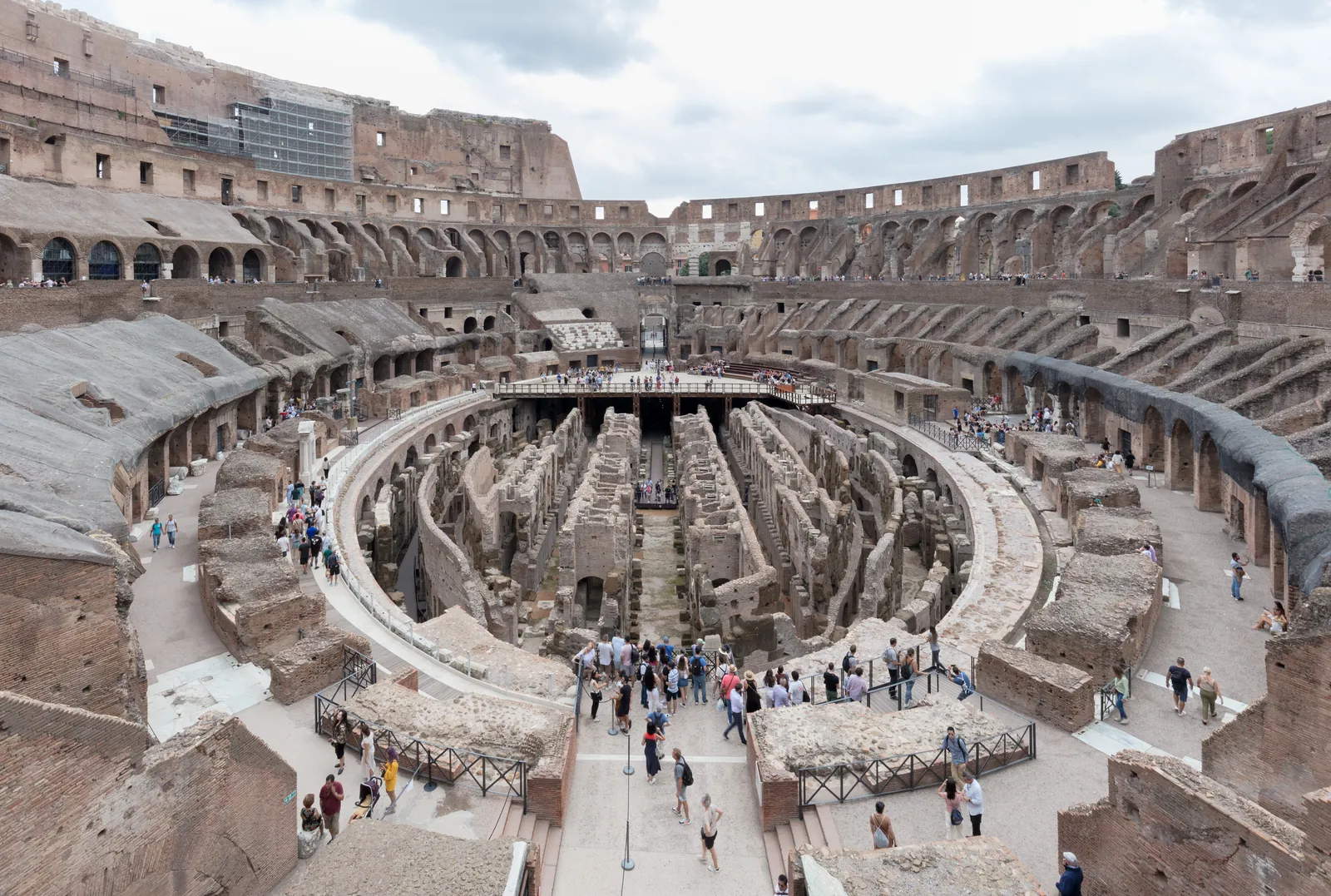
Interior of the Colosseum from the seating tiers: photo Diego Delso, 2022, CC BY-SA 4.0, via Wikimedia Commons. History card: the same photograph. Map: own plan based on OpenStreetMap data (ODbL).
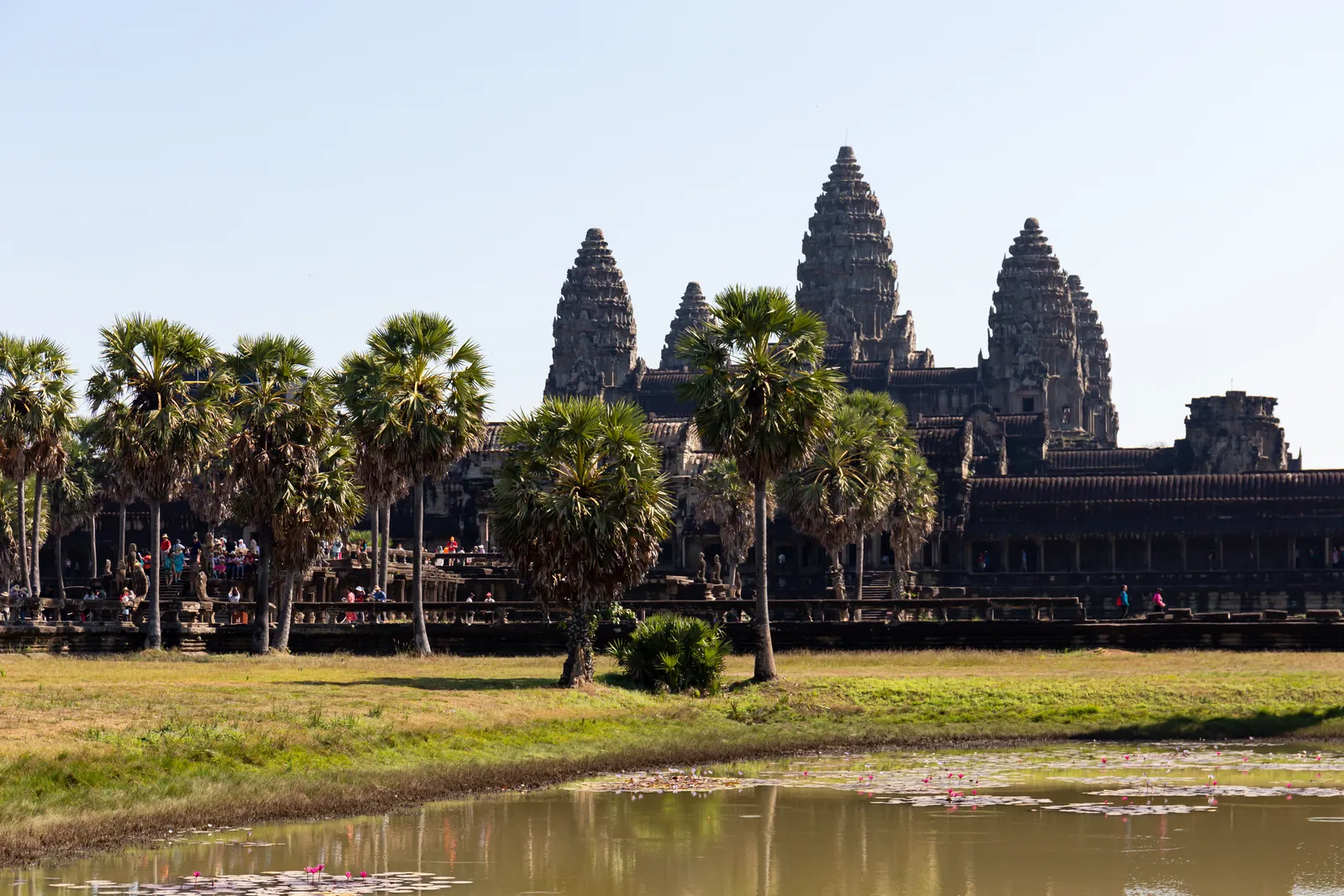
Angkor Wat from the west across the lotus pond, photographed on 10 December 2019. Balon Greyjoy / Wikimedia Commons · CC0 1.0. Resized to 1600 pixels wide and converted to WebP; no cropping or content alterations. Framing varies by screen. Derived photograph under the same licence.

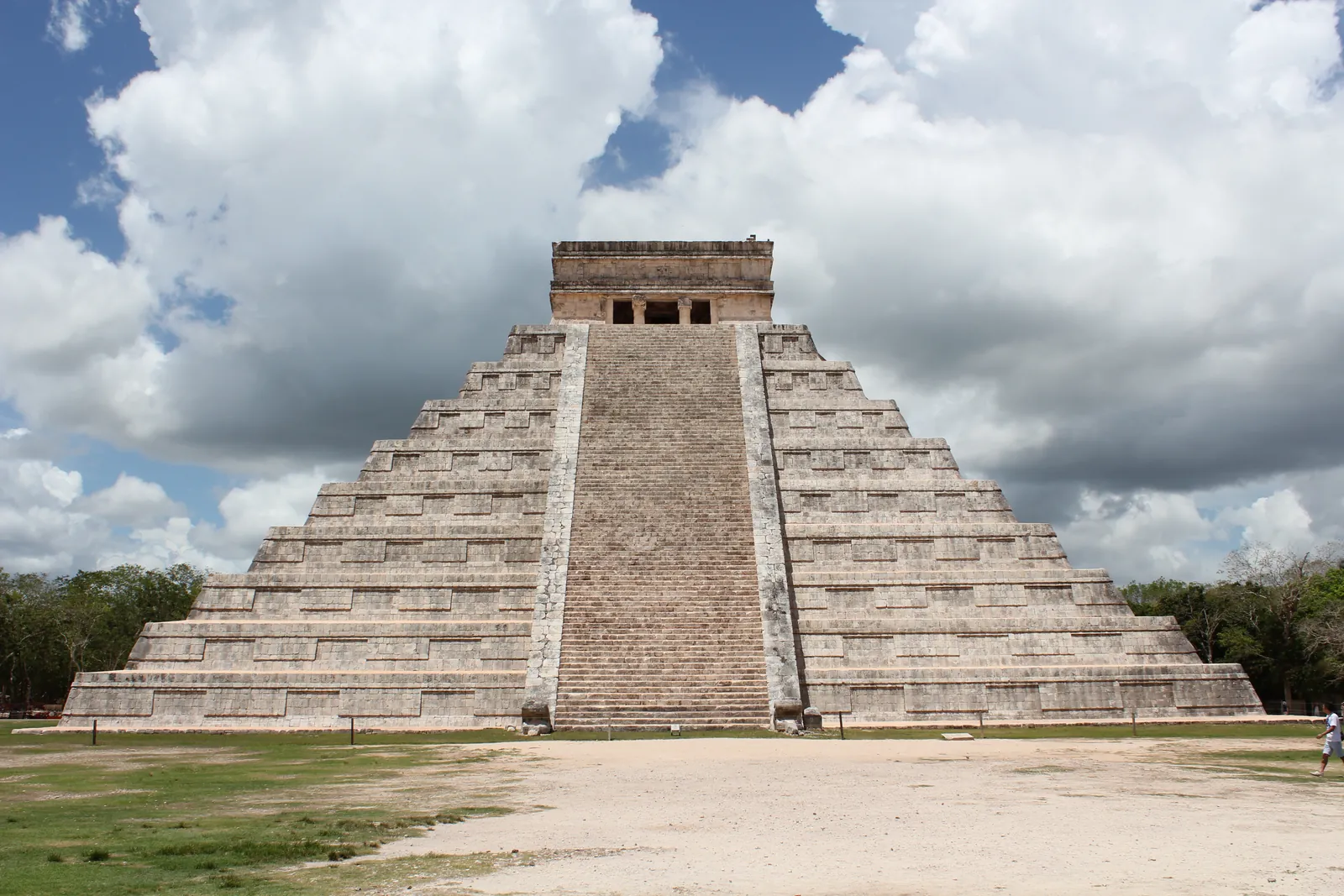
The Kukulcán pyramid (El Castillo) at Chichén Itzá, north side with the restored stairway, seen from the Great Platform. Photograph taken on 31 May 2013. Arian Zwegers / Wikimedia Commons · CC BY 2.0. Resized to 1600 pixels wide and compressed as WebP; no crop or content alterations. Framing varies by screen. Derived photograph under the same licence.
.jpg)
The excavations of Herculaneum seen from the access ramp: the boat houses on the ancient beach below, above them the terrace of Marcus Nonius Balbus, the town and Vesuvius; modern Ercolano on top. Photograph taken on 27 March 2023. Diego Delso / Wikimedia Commons · CC BY-SA 4.0. Resized to 1600 pixels wide and compressed as WebP; no crop or content alterations. Framing varies by screen. Derived photograph under the same licence.

View from the upper tier into the Colosseum: the exposed hypogeum, the partly reconstructed arena floor and the tiers opposite. Photograph taken on 15 September 2022. Diego Delso / Wikimedia Commons · CC BY-SA 4.0. Resized to 1600 pixels wide and compressed as WebP; no crop or content alterations. Framing varies by screen. Derived photograph under the same licence.

View from the Pnyx towards the Acropolis of Athens and the Parthenon, photographed on 20 May 2020. George E. Koronaios / Wikimedia Commons · CC BY-SA 4.0. Resized to 1600 pixels wide and converted to WebP; no cropping or content alterations. Framing varies by screen. Derived photograph under the same licence.

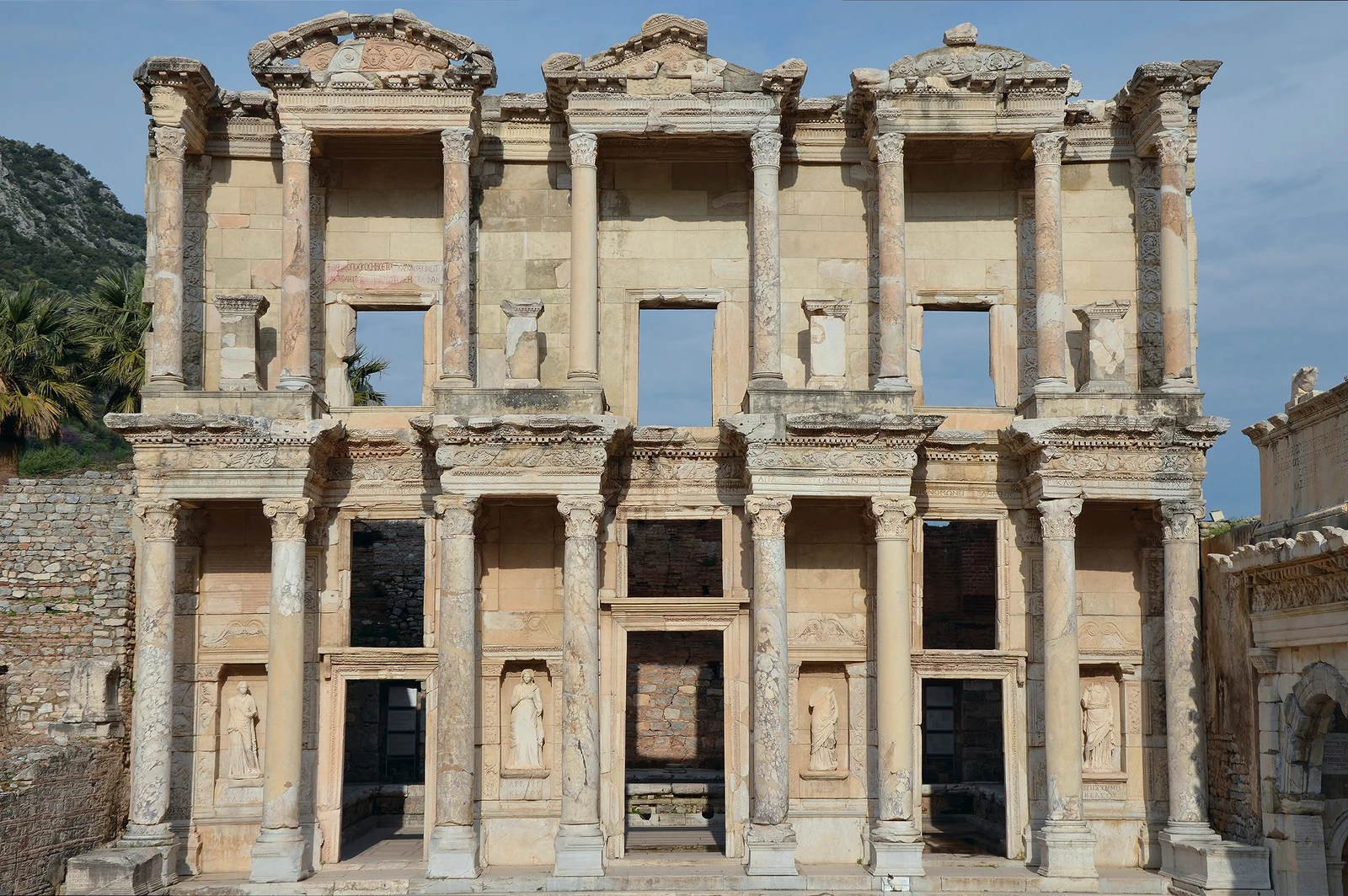
The façade of the Library of Celsus in Ephesus, Turkey, photographed on 8 April 2015. Carole Raddato / Wikimedia Commons · CC BY-SA 2.0. Resized to 1600 pixels wide and converted to WebP; no cropping or content alterations. Framing varies by screen. Derived photograph under the same licence.
.jpg)
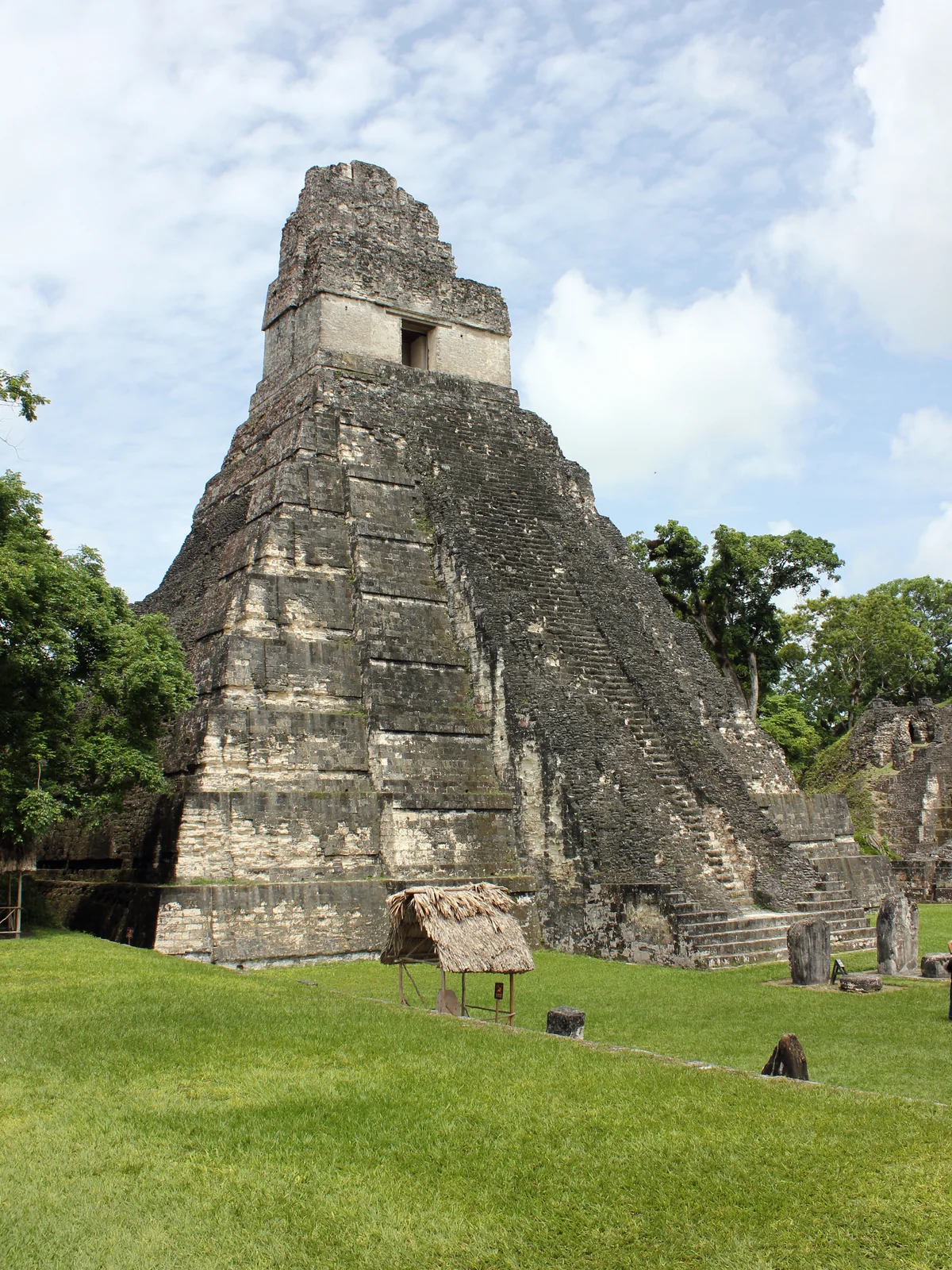
Temple I at the Great Plaza of Tikal, Guatemala. Photograph taken on 26 June 2015. Kaldari / Wikimedia Commons · CC0 1.0. Resized to a maximum edge of 1600 pixels and compressed as WebP; no crop or content alterations. Framing varies by screen. Derived photograph under the same licence.

View across the Avenue of the Dead at Teotihuacan: the Pyramid of the Sun stands to the right, with the Pyramid of the Moon at the far end of the axis. Photograph taken on 27 December 2017. Ralibreros112 / Wikimedia Commons · CC BY-SA 4.0. Resized to a maximum edge of 1600 pixels and compressed as WebP; no crop or content alterations. Framing varies by screen. Derived photograph under the same licence.

The Great Plaza of Tikal with Temple I, seen from Temple II; the North Acropolis stairway on the left, the Central Acropolis on the right. Photograph taken on 21 July 2010. Mario Bollini / Wikimedia Commons · CC BY 2.0. Resized to 1600 pixels wide and compressed as WebP; no crop or content alterations. Framing varies by screen. Derived photograph under the same licence.

Natural Earth / world-atlas · Licences