Colosseum Map: Plan with the Roman Forum and Palatine Hill
Our own plan of the Archaeological Park of the Colosseum with 20 highlights: the Colosseum with arena, hypogeum and upper tier, the Arch of Constantine, the Arch of Titus, the Via Sacra, the temples and the Curia of the Roman Forum, the imperial palaces on the Palatine Hill, plus the three entrances and Colosseo metro station. Tap a number for details, choose a route or print the map for your visit.
Map of the Colosseum, Roman Forum and Palatine Hill
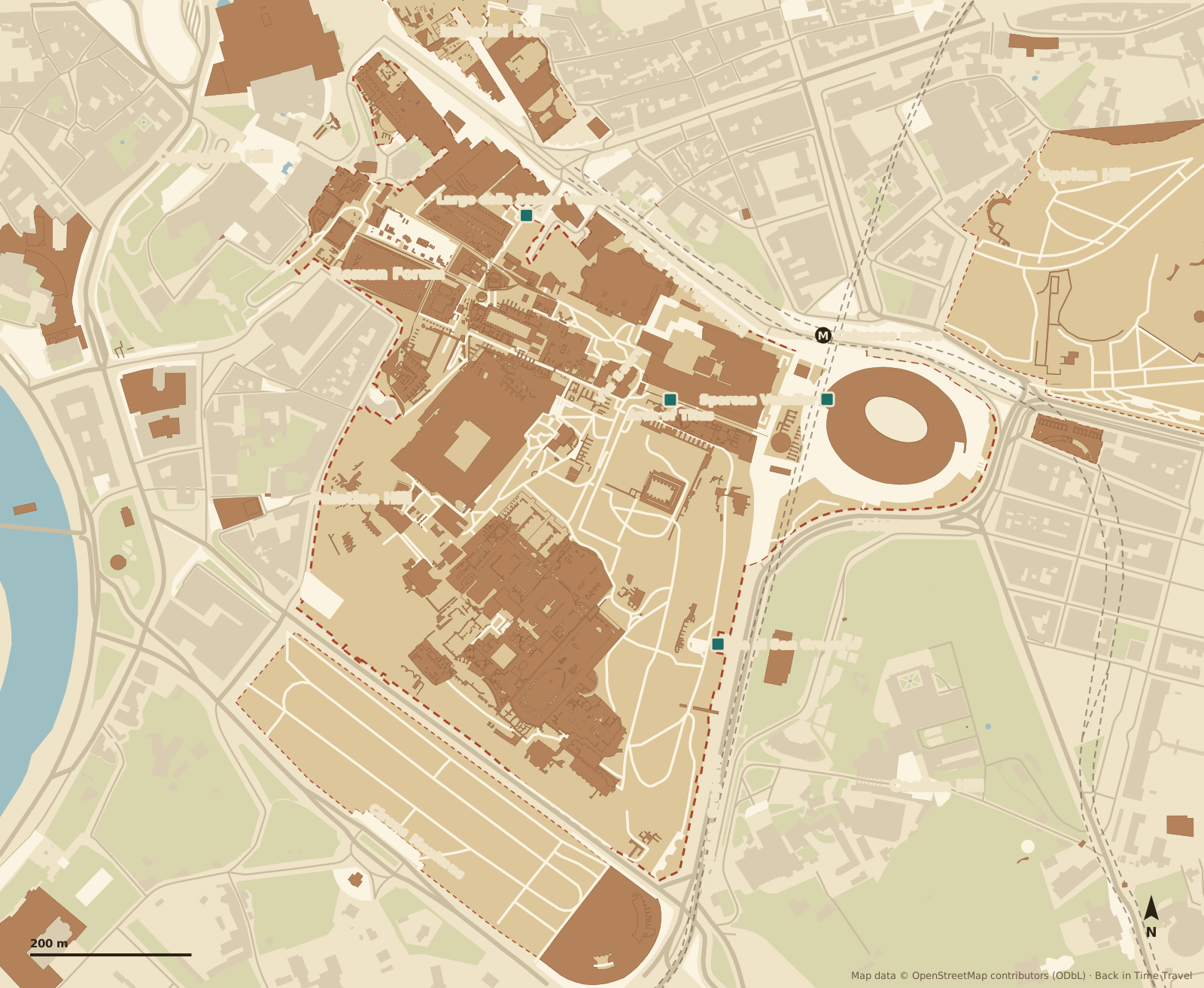
Map data © OpenStreetMap contributors, ODbL. Drawn by Back in Time Travel, data as of 25 September 2026. The map is a guide; paths, open areas and entrances can change.
The 20 highlights on the map
The numbers match the map. The order follows a circuit from the metro into the Colosseum, on to the Arch of Constantine, under the Arch of Titus and down the Via Sacra through the Roman Forum to the Temple of Saturn, and finally up the Palatine Hill with the exit on Via di San Gregorio.
Colosseo metro Line B, exit on Via dei Fori Imperiali
The station is directly opposite the Colosseum; from the exit you see the arcades. From Termini it is two stops, and the Line C station Colosseo–Fori Imperiali adjoins it. Tram 3 and several bus routes stop at Piazza del Colosseo. All three routes start here.
Read more →Colosseum: Sperone Valadier entrance West side, facing the metro
The visitor entrance at the buttress of 1826. Timed ticket, security check, then up the ancient ramps to the first tier overlooking the arena. The circuit of the two lower tiers takes a good hour; the exit is on the south side.
Read more →Arena 83 by 48 metres of fighting ground
The arena was a wooden floor covered in sand above the hypogeum; part of it has been rebuilt, elsewhere you look down into the passages below. You can only step onto the arena floor with an “Arena” or “Full Experience” ticket, through the same gate the gladiators used. Our history of the Colosseum begins here.
Read more →Hypogeum The passages beneath the arena
Two storeys of corridors, cages and lift shafts where animals and scenery waited until winches hoisted them up through trapdoors. Fully accessible since the 2021 restoration, but only on a guided visit (“Full Experience Underground” ticket).
Read more →Upper tier Third to fifth tiers, the Belvedere
The upper tiers are open only on guided visits (“Belvedere” or “Attic” ticket). From up here you take in the whole ellipse, the Forum, the Palatine and the Arch of Constantine. The second tier with its panoramic view is included in the standard ticket and reached by lift.
Read more →Arch of Constantine 315 AD, free to view
Rome’s largest surviving triumphal arch, 21 metres high, dedicated by the Senate for Constantine’s victory at the Milvian Bridge in 312. Many of its reliefs were taken from older monuments of Trajan, Hadrian and Marcus Aurelius. It stands outside the ticketed area, fenced, visible from all sides.
Read more →Temple of Venus and Roma Hadrian’s largest temple
The largest temple in the city, dedicated by Hadrian in 135 AD, 110 by 53 metres: two cellae back to back, one for Venus, one for the goddess Roma. The apse and parts of the coffered vaults still stand. Reached from the Forum area, on the way to the Arch of Titus.
Arch of Titus Gateway to the Forum, 81 AD
Built under Domitian for his brother Titus to commemorate the capture of Jerusalem in 70 AD. Inside the passage a relief shows the triumphal procession with the menorah from the Temple. From here the Via Sacra runs down into the Forum and the Clivus Palatinus climbs the Palatine.
Read more →Via Sacra The Sacred Way
The processional route of the triumphs from the Arch of Titus to the Capitol, paved with basalt slabs from the imperial period. It is the main axis of the Forum; all the temples and basilicas of the next stops line it.
Basilica of Maxentius Three vaults, 35 metres high
Begun by Maxentius in 308 AD and completed by Constantine after 312: the largest basilica in Rome, 100 by 65 metres. The three surviving barrel vaults of the north aisle are among the boldest structures of antiquity. The colossal statue of Constantine stood in the west apse; its head is now in the Capitoline Museums.
Temple of Antoninus and Faustina 141 AD, a church since the Middle Ages
Dedicated by Antoninus Pius to his deified wife Faustina and later to himself. The ten columns of green cipollino marble, 17 metres high, survived because the church of San Lorenzo in Miranda was built into the cella; the baroque facade of 1602 rises out of the ruin.
Temple of Vesta and House of the Vestals The sacred fire of Rome
In the round temple the six Vestal Virgins tended the fire that was never allowed to go out; three columns and a piece of entablature were re-erected in the 1930s. Next to it their residence around a long courtyard with pools and the statues of the chief priestesses.
Curia Julia The Senate house
Begun by Caesar, dedicated under Augustus in 29 BC and rebuilt under Diocletian after the fire of 283. The brick building survived as the church of Sant’Adriano and can be visited inside: marble floor, the steps for the senators’ seats and the relief panels of Trajan.
Arch of Septimius Severus 203 AD, at the foot of the Capitol
The triple arch, 23 metres high, celebrates the victories of the emperor and his sons Caracalla and Geta over the Parthians. Geta’s name was erased from the inscription after his murder. In front of it lie the speakers’ platform (Rostra) and the Umbilicus Urbis, the symbolic centre of Rome.
Temple of Saturn Eight columns, the state treasury
One of the oldest temples in the city, dedicated around 497 BC; the eight granite columns date from the rebuilding after the fire of 283 AD, as the inscription on the entablature says. The podium housed the Aerarium, Rome’s state treasury. The view from here across the whole Forum to the Colosseum is the closing image of the circuit.
Largo della Salara Vecchia entrance Main entrance to the Forum, with ticket office
On Via dei Fori Imperiali, opposite the Forum of Nerva. The three-hour route ends here; if you start with the Forum, begin here. The Imperial Fora with Trajan’s Column lie a few minutes further north-west, visible from the street without a ticket.
Read more →Farnese Gardens Orti Farnesiani, the best view of the Forum
From 1550 Cardinal Alessandro Farnese laid out one of the first botanical gardens in Europe on the remains of the palace of Tiberius. From the terrace with its two aviaries you look out over the whole Forum and the Capitol. The Domus Tiberiana below has been open again since 2023.
Domus Augustana and Domus Flavia Domitian’s palace, 92 AD
The imperial palace that gave us the word “palace”: the Domus Flavia with throne room, basilica and banqueting hall for affairs of state, the Domus Augustana with its sunken peristyle as the emperors’ residence. Between them the Palatine Museum with finds from the hill; from the exedra you look down on the Circus Maximus.
Stadium Domitian’s garden hippodrome, 160 by 48 metres
Not a stadium for spectators but a sunken garden in the shape of a racetrack, surrounded by a two-storey portico, with an imperial box on the east side. The small oval at the southern end was added by the Gothic king Theoderic around 500. From here it is only a short descent to the exit.
Via di San Gregorio entrance Palatine entrance with ticket office
The south-eastern entrance to the Palatine and Forum, 200 metres from the Arch of Constantine, usually with shorter queues. The path leads straight up to the Stadium. At the end of the day it is the nearest exit to tram 3 (Parco Celio stop) and Colosseo metro.
Read more →
Routes through the Colosseum, Forum and Palatine
Three suggestions, all from Colosseo metro. Choose a route and its stops are highlighted on the map. The combined ticket allows one entry to the Colosseum and one to the Forum and Palatine area; plan the Colosseum for your booked time slot.
Colosseum and Forum in 3 hours
From the Sperone Valadier into the Colosseum with views of the arena and hypogeum, then to the Arch of Constantine and under the Arch of Titus down the Via Sacra: Basilica of Maxentius, Temple of Antoninus and Faustina, House of the Vestals, Curia, Arch of Septimius Severus, Temple of Saturn. Exit at Largo della Salara Vecchia.
- 1 Colosseo metro
- 2 Colosseum: Sperone Valadier entrance
- 3 Arena
- 4 Hypogeum
- 6 Arch of Constantine
- 8 Arch of Titus
- 9 Via Sacra
- 10 Basilica of Maxentius
- 11 Temple of Antoninus and Faustina
- 12 Temple of Vesta and House of the Vestals
- 13 Curia Julia
- 14 Arch of Septimius Severus
- 15 Temple of Saturn
- 16 Largo della Salara Vecchia entrance
The whole day with the Palatine
All 20 stops: the Colosseum with its upper tier, the Roman Forum from the Arch of Titus to the Capitol, then up the Clivus Palatinus to the Farnese Gardens, the Domus Augustana and the Stadium, leaving by Via di San Gregorio. Six to seven hours with breaks; bring water and a hat.
- 1 Colosseo metro
- 2 Colosseum: Sperone Valadier entrance
- 3 Arena
- 4 Hypogeum
- 5 Upper tier
- 6 Arch of Constantine
- 7 Temple of Venus and Roma
- 8 Arch of Titus
- 9 Via Sacra
- 10 Basilica of Maxentius
- 11 Temple of Antoninus and Faustina
- 12 Temple of Vesta and House of the Vestals
- 13 Curia Julia
- 14 Arch of Septimius Severus
- 15 Temple of Saturn
- 16 Largo della Salara Vecchia entrance
- 17 Farnese Gardens
- 18 Domus Augustana and Domus Flavia
- 19 Stadium
- 20 Via di San Gregorio entrance
The Colosseum with children
Short and with views: the Colosseum with arena and upper tier, a photo stop at the Arch of Constantine, through the Arch of Titus up the Palatine for the view over the Forum, a picnic in the Farnese Gardens, then the Stadium and the descent to Via di San Gregorio. Three to four hours, few steps in the Forum, but the hill to climb.
The entrances and the metro
- Colosseum: Sperone Valadier
- The only visitor entrance to the Colosseum is at the Sperone Valadier, the buttress of 1826 on the west side facing Via dei Fori Imperiali, two minutes from the metro. Buy a timed ticket in advance, pass security, then take the ancient ramps up to the first tier. The exits are on the south side towards the Arch of Constantine.
- Roman Forum: Largo della Salara Vecchia
- The main entrance to the Forum and Palatine on Via dei Fori Imperiali, with a ticket office, opposite the Forum of Nerva. From here you reach the Basilica Aemilia and the Curia in two minutes. Ten minutes on foot from Colosseo metro, five from Cavour.
- Palatine Hill: Via di San Gregorio 30
- The south-eastern entrance with its own ticket office, 200 metres from the Arch of Constantine. A path leads straight up to the Stadium and the imperial palaces; ideal if you start with the Palatine or leave it until last. Usually shorter queues than at Largo della Salara Vecchia.
- Arch of Titus
- The third access to the Forum is at Piazza del Colosseo behind the Temple of Venus and Roma and leads along the Via Sacra under the Arch of Titus. At times it is used as an exit only; the signs on site apply.
- Colosseo metro
- The Line B station is directly opposite the Colosseum, with the exit on Via dei Fori Imperiali. From Termini it is two stops. The Line C station Colosseo–Fori Imperiali adjoins it. Tram 3 stops at Piazza del Colosseo, several buses on Via dei Fori Imperiali.
Prices, time slots, the tickets for the arena, hypogeum and upper tiers, and opening hours are in our guide Colosseum tickets and admission.
Where is the Colosseum?
The Colosseum stands in the heart of Rome’s historic centre, at the eastern end of the Roman Forum in the valley between the Palatine, Esquiline and Caelian hills. Termini station is about two kilometres to the north-east, two stops on Metro Line B; St Peter’s is about four kilometres to the north-west, half an hour by metro and bus. Distances from the Colosseum, as the crow flies:
- Termini station
- 1.4 km
- St Peter’s Square (Vatican)
- 3.2 km
- Fiumicino airport
- 23 km
- Ostia Antica
- 22 km
- Tivoli (Hadrian’s Villa)
- 24 km
- Naples
- 188 km
- Florence
- 232 km
Frequently asked questions about the Colosseum map
Where is the Colosseum?
The Colosseum stands in the historic centre of Rome, Piazza del Colosseo, at the eastern end of the Roman Forum and at the foot of the Palatine Hill. Termini station is 1.4 km to the north-east as the crow flies (two metro stops), St Peter’s Square 3.2 km to the north-west. Fiumicino airport is 23 km to the south-west, Naples 188 km and Florence 232 km, all as the crow flies.
How big is the site and how long does it take?
The Colosseum, Roman Forum and Palatine together form the Archaeological Park of the Colosseum, a good kilometre long from the Colosseum to the Capitol and about 40 hectares in area. Allow one to one and a half hours for the Colosseum, an hour and a half for the Forum and one to two hours for the Palatine. The three-hour route leaves out the Palatine; the whole day takes six to seven hours with breaks.
Is there a printable Colosseum map?
Yes: use the “Print map or save as PDF” button on this page. It prints the map, the highlights and the routes. On site there are information boards at the entrances, and the bookshop in the Colosseum sells folding plans.
Which entrance is best?
The Colosseum can only be entered at the Sperone Valadier. For the Forum and Palatine, Largo della Salara Vecchia on Via dei Fori Imperiali is the main entrance with the longest queues; Via di San Gregorio is usually quicker and the path leads straight up the Palatine. The access at the Arch of Titus is at times used as an exit only.
Can I move freely between the Colosseum, Forum and Palatine?
The standard ticket is valid for 24 hours from first use and allows one entry to the Colosseum at the booked time and one entry to the combined Forum and Palatine area. Within that area you move freely between the Forum and the hill; once you leave it, you cannot re-enter.
How do I get from Termini station to the Colosseum?
Take Metro Line B towards Laurentina two stops to Colosseo, seven minutes. On foot it is two kilometres along Via Cavour, just under half an hour downhill. From Fiumicino airport take the Leonardo Express to Termini and change to the metro there.
Is the site accessible with a pushchair or wheelchair?
In the Colosseum a lift goes up to the first and second tiers, where the circuit is level; the arena and hypogeum are reached by steps only. In the Forum the ancient paving is bumpy but free of steps from the Largo della Salara Vecchia entrance. The Palatine is steep; the easiest way up is the ramp from Via di San Gregorio.