Chichen Itza Tickets and Entrance Fee 2026
How much is admission, why do you pay two fees at one ticket booth, and is the trip from Cancun worth doing on your own? Prices, opening hours and rules come from INAH, Mexico’s National Institute of Anthropology and History, and from the state of Yucatán, last checked on 25 September 2026.
The essentials in 30 seconds
- Admission costs 697 pesos (about US$39 / €35) for foreign visitors: 105 pesos for INAH and 592 pesos Yucatán state fee, sold since 2026 as a single ticket at one booth. Mexicans pay 310 pesos, and nothing on Sundays.
- Children under 13, over-60s, students and teachers with valid ID and people with disabilities go free.
- Tickets are sold online on the INAH portal (697 pesos, both fees, until 3.40 pm for the same day) or at the main entrance (Parador Turístico) and the visitor centre in the north. Reduced and free tickets only at the booth with ID.
- Open daily 8 am to 5 pm, ticket booths and last entry 4 pm, including public holidays. Climbing is banned on every structure, and Old Chichén (Serie Inicial) is currently closed.
- From Cancun it is about 200 kilometres and just under three hours by bus or car; the Maya Train stops at Pisté, two kilometres from the site, with a 55-peso shuttle.
The second link is an affiliate link: we may earn a commission if you book, at no extra cost to you.
Chichen Itza admission prices 2026
Prices in Mexican pesos (MXN), with rough US dollar and euro equivalents in brackets. The ticket is valid for one day across the whole zone; it combines the INAH fee and the Yucatán state fee.
| Ticket | Included | Price | Reduced* | Validity |
|---|---|---|---|---|
| Archaeological zone and Gran Museo, foreign visitors | Single ticket for INAH (105 MXN) and the Yucatán state fee (592 MXN); the whole zone with the northern group, the Sacred Cenote and Old Chichén where open, plus the Gran Museo de Chichén Itzá; online from INAH or at the booth | 697 MXN (about US$39 / €35) | 1 day | |
| Mexicans and residents of Mexico | INAH 105 MXN plus state fee 205 MXN, with INE or residence permit | 310 MXN (about US$17.50 / €15.50) | free on Sundays | 1 day |
| Residents of Yucatán | INAH fee only, with state ID | 105 MXN (about US$6) | free on Sundays | 1 day |
| Children under 13, over-60s, students, teachers, people with disabilities, pensioners | With ID, student card or INAPAM card; in practice Mexican credentials are expected | free | ||
| Video camera | Permit for non-professional filming, paid at the ticket booth (Diario de Yucatán, 2 January 2026) | 63 MXN (about US$3.60) | 1 day | |
| Car park | Car park at the Parador Turístico, cash; INAH car park at the visitor centre in the north | about 80–150 MXN (about US$4.50–8.50) | 1 day | |
| Noches de Kukulcán | Video mapping on the pyramid, Wednesday to Sunday at 7 pm, run by the state, not included in the day ticket | about 730 MXN (about US$41) | reduced on Sundays | 1 evening |
| Maya Train shuttle | Chichén Itzá station (Pisté) to the site via the Hotel Tren Maya, about 20 minutes | 55 MXN (about US$3) |
* Discounts and free Sundays apply to Mexicans and residents of Mexico only; foreign visitors pay the full price, Sundays included. Prices according to INAH and La Jornada Maya (19 September 2026), as of September 2026; INAH adjusts its fee at the start of each year, and the state of Yucatán raised its fee during 2026 from 571 to 592 pesos. Euro and dollar figures are rough conversions (rate of 25 September 2026). Parking, the light show and the shuttle are operators’ prices and change.
The equinox and Noches de Kukulcán: are they worth it?
- Equinox: At the equinox the north-west edge of the pyramid casts seven triangles of light onto the balustrade, which join the serpent head at the foot to form a serpent. According to INAH, though, the effect is not tied to one day: it runs from 12 February to 29 October, clearest in the weeks around 21 March and 22 September, roughly between 3 and 5 pm. At the spring equinox of 2025, 32,872 people came; INAH then closes areas from 3.30 pm and bans tripods, drones and ceremonies. To see the serpent, come a week before or after the date, without the crowd.
- Noches de Kukulcán: From Wednesday to Sunday at 7 pm the state of Yucatán projects a half-hour light and sound show onto the pyramid. It is a separate ticket from the organiser, at the Parador or online, about 730 pesos according to 2026 press reports, reduced on Sundays; the exact prices appear only after registering on the organiser’s site. The show is entertainment, not a guided tour; it is worth it if you stay overnight in Pisté or Valladolid.
- Sundays: Admission is free for Mexicans, so the site is packed. If you can choose, come Tuesday to Thursday and be there at 8 am: the coaches from Cancun arrive between 10 and 11.
Chichen Itza opening hours
| Period | Opens | Last entry |
|---|---|---|
| All year, including holidays | 8:00 am | 4:00 pm (ticket booths close; clearing from 5:00 pm) |
| Gran Museo de Chichén Itzá | 8:00 am | 5:00 pm (until 3 pm at the equinoxes) |
| Noches de Kukulcán (Wed–Sun) | 7:00 pm | admission 15 minutes before |
INAH lists 8 am to 4 pm daily as the admission window for the zone; clearing begins at 5 pm, at the equinoxes at 5.30 pm. Old Chichén (Serie Inicial) is temporarily closed according to INAH. Around 21 March and 22 September special rules apply: areas close from 3.30 or 4 pm, the museum shortens its hours, and tens of thousands of visitors come.
Buying tickets: online, at the booth or with a tour
Just the ticket? Buy it at the booth: at the main entrance in the west (Parador Turístico) or at the visitor centre in the north by the Gran Museo. Since January 2026 a single ticket covers both the INAH fee and the state fee, so one queue instead of two. Or buy ahead on the INAH ticket portal: there the listing is called “Zona Arqueológica y Gran Museo Chichén-Itzá”, the ticket “Acceso General y Extranjero” costs 697 pesos, both fees together, dated, with no exchange or refund; same-day online sales close at 3.40 pm, and reduced and free tickets are sold only at the booth with ID (as of 25 September 2026). Current hours and prices are on inah.gob.mx.
With a guide or transfer? Then a package makes sense. Providers such as GetYourGuide bundle pick-up in Cancun, Playa del Carmen, Tulum or Mérida, the drive, admission, a guide, a cenote and Valladolid in one day. The value lies in the transport and the guide, not the ticket: a reseller’s “skip-the-line ticket” costs more than twice the booth price. If you arrive without a tour, book an on-site guided tour with a certified guide.
Note: Bring pesos in cash. Card terminals at the booths fail, and the state fee is charged without exception, even with an international student card. There is no re-entry on the day ticket, no climbing on any structure, and no tripods without a permit.
Free admission and discounts
- Children under 13: free, with ID or passport.
- Over-60s, pensioners, people with disabilities: exempt from both fees; for seniors the Mexican INAPAM card applies in practice, and foreign pension cards are not always accepted.
- Students and teachers: free with valid ID; the state law names no nationality, but the booths expect Mexican credentials.
- Sundays: free only for Mexicans and residents of Mexico with a residence permit; residents of Yucatán never pay the state fee. Foreign visitors pay 697 pesos.
- No combined ticket: the ticket is valid for one day in the zone; there is no pass covering several Maya sites. Ek Balam, Uxmal and the cenotes charge their own admission.
Chichen Itza with a guide: from Cancun, Playa del Carmen, Mérida or Valladolid
INAH’s panels are brief, and two cities in one place do not explain themselves. A two-hour guided tour puts the Kukulcán pyramid, the ball court, the Temple of the Warriors and the cenote in order and explains why researchers now date the city differently from the guidebooks. Most tours start in Cancun or on the Riviera Maya and run in English and Spanish; choose the language when booking. German-speaking guides are available on site for private tours.
Affiliate links to GetYourGuide: we may earn a commission if you book, at no extra cost to you. Prices, languages and availability change; the provider’s listing prevails. Selection checked on 25 September 2026.
Getting there: from Cancun, Mérida, Valladolid and Tulum
Chichen Itza lies in northern Yucatán on Highway 180, 115 kilometres east of Mérida, 45 kilometres west of Valladolid and about 200 kilometres west of Cancun, two kilometres east of the village of Pisté. The easiest way without a tour has been the Maya Train since 2024: Chichén Itzá station is in Pisté; from Cancun Airport the ride takes just over two hours (Turista class 502 pesos), from Mérida-Teya about 1 hour 40 (330 pesos), from Valladolid 25 minutes (111 pesos). From the station the official shuttle runs to the site and the Gran Museo in 20 minutes for 55 pesos. Timetables and tickets are on the Maya Train website.
By bus, ADO runs from Cancun, Playa del Carmen, Tulum and Mérida to the Parador at the main entrance, about three hours from Cancun; afternoon return departures are limited, so book the way back at the same time. From Valladolid the cheapest option is the colectivo from Calle 54 to Pisté, 40 to 60 pesos, 40 minutes, returning until about 5 pm. By car, take the 180D toll road Cancun–Mérida to the Pisté exit, a good two hours from Cancun, or the free 180 via Valladolid; car parks at the Parador and the visitor centre. If you would rather not organise the day yourself, take a tour with hotel pick-up.
Entrances, visitor centre and car parks
- Main entrance (Parador Turístico)
- In the west on the old Highway 180, two kilometres east of Pisté. Ticket booths, lockers, toilets, restaurants and craft market; ADO buses, colectivos and taxis stop outside. From here it is 400 metres to the great platform with the pyramid.
- CATVI visitor centre with the Gran Museo
- In the north on the Highway 180 bypass: the Gran Museo de Chichén Itzá, opened in 2024, a second craft market and the large INAH car park. The shuttle from the Maya Train station stops here. The path into the zone leads past the Sacred Cenote.
- Sacred Cenote
- At the northern end of the processional way, 300 metres from the pyramid. At the equinoxes the link between the zone and the museum, with re-entry.
- Old Chichén (Serie Inicial)
- The southern group behind Las Monjas is temporarily closed according to INAH; the Caracol, Las Monjas and Akab Dzib remain open.
Both entrances, the 19 highlights and three routes are on our Chichen Itza map. How a Puuc town became the city of the Kukulcán pyramid, and why it fell, is told in our history of Chichén Itzá.
Around Chichen Itza: Gran Museo, cenotes, Valladolid
The Gran Museo de Chichén Itzá at the visitor centre in the north, opened in February 2024, shows more than 1,000 objects, 400 of them originals from Mérida and from the rescue excavations for the Maya Train, in 14 sections: ceramic chronology, trade routes, the Sacred Cenote with a multimedia room, astronomy, architecture. Open 8 am to 5 pm; INAH sells the ticket expressly for “Zona Arqueológica y Gran Museo”, so the museum is included in admission. If you want to see the finds from the cenote, allow an hour.
Three kilometres east lies Cenote Ik Kil, the stop of almost every coach tour and crowded from midday; quieter are Yokdzonot 18 kilometres west or the cenotes around Valladolid. Valladolid itself, 45 kilometres east, has the convent of San Bernardino, the Zací cenote in the middle of town and hotels from which you can be at the booth at 8 am. To compare two Maya cities, continue to Ek Balam, 30 kilometres north of Valladolid, where the acropolis may still be climbed.
Tips for your visit
- Early or late: At 8 am the platform is almost yours; from 10 am the coaches from Cancun and Mérida arrive, and after 3 pm it empties again. Tuesday to Thursday are the quietest days, Sunday the busiest.
- From the pyramid to the cenote: First the northern group with the pyramid, the ball court and the Temple of the Warriors, then the processional way to the Sacred Cenote, and last the Caracol and Las Monjas in the south, where there are fewer people.
- Heat and shade: The platform has no shade, and from March to October it is above 35 °C by midday. Hat, sunscreen, two litres of water; food is not catered for, water is.
- No climbing: Every structure has been closed since 2006, including the pyramid stairway. Climbing anyway risks a fine and arrest.
- Clap in front of the stairway: The echo off the north stairway sounds like the call of the quetzal; whether that was intended, nobody knows. Our history explains what is documented here and what is interpretation.
Frequently asked questions about Chichen Itza tickets
How much is the Chichen Itza entrance fee?
697 pesos, about US$39 or €35, for foreign visitors (as of September 2026): 105 pesos INAH fee plus 592 pesos Yucatán state fee, sold since 2026 as a single ticket. Mexicans pay 310 pesos and nothing on Sundays; residents of Yucatán pay 105 pesos. Children under 13, over-60s, students, teachers and people with disabilities go free with ID.
Can you buy Chichen Itza tickets online?
Yes, on the official INAH portal ventadeboletosenlinea.inah.gob.mx: the ticket “Acceso General y Extranjero” costs 697 pesos there, the INAH fee and the state fee together, covers the zone and the Gran Museo and is tied to a date; same-day sales end at 3.40 pm. Reduced and free tickets are sold only at the booth with ID. Resellers’ online offers cost more than twice as much; tours with admission included, for example on GetYourGuide, are the alternative if you want transport and a guide.
What are the opening hours of Chichen Itza?
Daily from 8 am to 5 pm, ticket booths and last entry at 4 pm, all year round and on public holidays. The Gran Museo is open 8 am to 5 pm. At the equinoxes around 21 March and 22 September areas close from 3.30 pm.
Can you climb Chichen Itza?
No. Every structure has been closed since 2006, El Castillo included; INAH punishes violations with fines and, in several cases, arrest. If you want to climb a Maya pyramid, go to Ek Balam near Valladolid or to Cobá.
How do I get from Cancun to Chichen Itza?
It is about 200 kilometres. Take the Maya Train from Cancun Airport in just over two hours to Pisté (Turista class 502 pesos) and the 55-peso shuttle, the ADO bus in about three hours to the main entrance, a hire car on the 180D toll road in a good two hours, or a day tour with hotel pick-up, usually with a cenote and Valladolid.
How long do you need at Chichen Itza?
Two to three hours for the northern group, the Sacred Cenote and Old Chichén, half a day with the Gran Museo. Day tours from Cancun allow two hours at the site and are on the road for twelve.
Can I visit Chichen Itza without a tour?
Yes. With a ticket you move freely; the paths are signposted, and our map shows the entrances, 19 highlights and three routes. The Maya Train or the colectivo from Valladolid gets you there without a tour, and certified guides wait at the entrance for a two-hour guided visit.
When can you see the equinox at Chichen Itza?
According to INAH the serpent of light is not limited to one day: the effect on the north-west balustrade runs from 12 February to 29 October, with seven triangles around 21 March and 22 September, roughly between 3 and 5 pm. On the dates themselves more than 30,000 people come; a week before or after you see almost the same.
What is Noches de Kukulcán?
A half-hour light and sound show run by the state of Yucatán, projected onto the pyramid from Wednesday to Sunday at 7 pm. Separate ticket from the organiser, about 730 pesos according to 2026 press reports, reduced on Sundays; the prices appear only after registering on the organiser’s site.
When is the best time to visit Chichen Itza?
At 8 am on a Tuesday to Thursday, in the dry season from November to April. On Sundays admission is free for Mexicans and the zone is crowded; from March to October the heat exceeds 35 °C from midday.
Sources and status
Text: Daniela Pieper, Back in Time Travel editorial team. Opening hours, prices and rules checked on 25 September 2026. Details may change: INAH adjusts its fee at the start of the year, the state of Yucatán also during the year; INAH and the state prevail.
- INAH: Zona Arqueológica de Chichén Itzá (location, opening hours, INAH and state fees)
- INAH bulletin: spring equinox 2026 operation (hours, closed areas, bans, 2025 attendance)
- INAH bulletin: calendrical and astronomical aspects of El Castillo (light effect 12 February to 29 October)
- La Jornada Maya, 19 September 2026: autumn 2026 operation (single ticket 697/310 MXN, exemptions)
- Diario de Yucatán, 2 January 2026: 2026 fees in Yucatán (exemptions under art. 288, video 63 MXN)
- INAH ticketing portal: Zona Arqueológica y Gran Museo Chichén-Itzá (online ticket 697 MXN, checked 25 September 2026)
- Noches de Kukulcán: organiser’s site, state of Yucatán
- Maya Train: official site (timetables, tickets)
- Chichén Itzá station: fares and shuttle (rutatrenmaya.mx)
- ADO: bus connections from Cancun, Playa del Carmen, Tulum, Mérida
Image credit
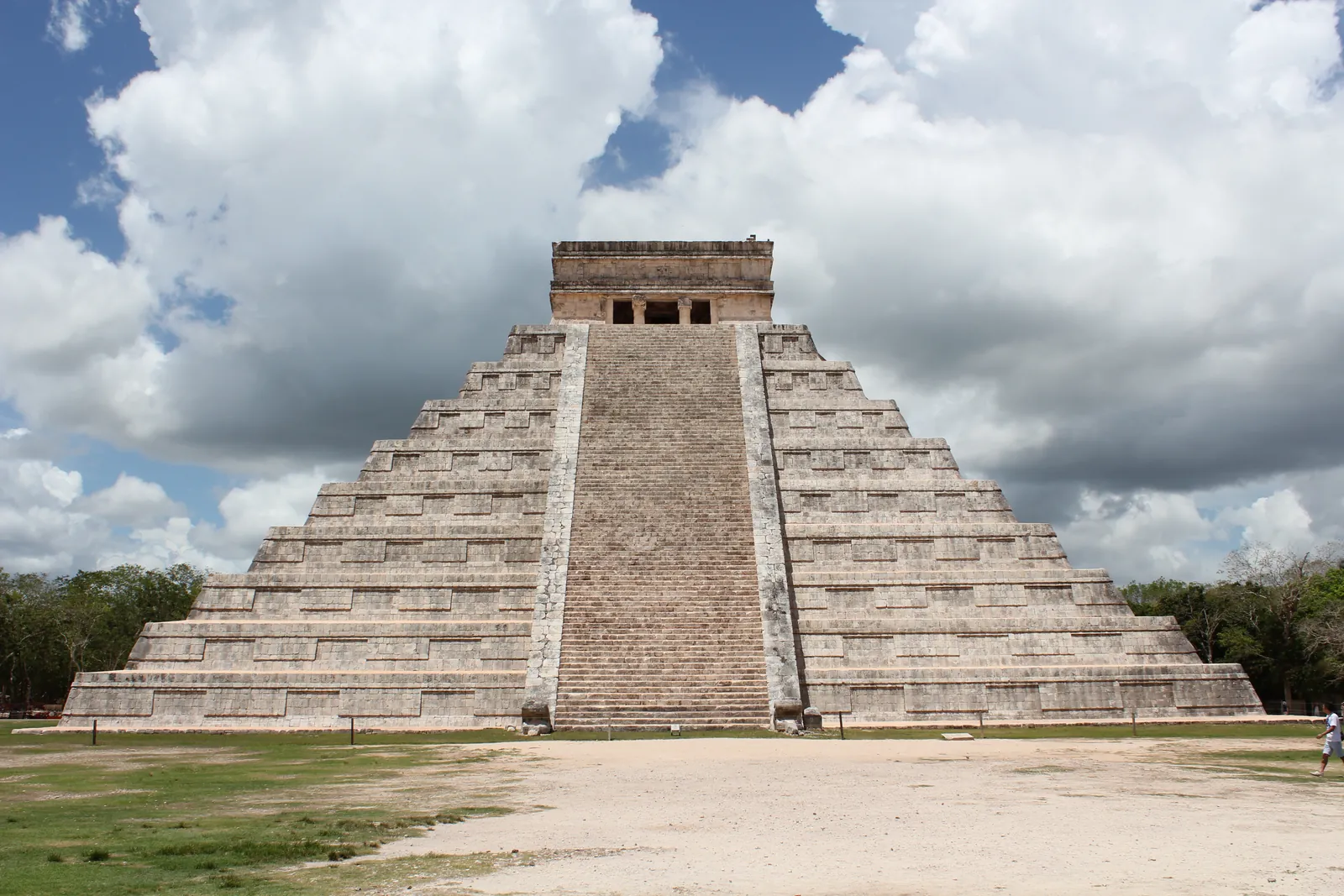
The Kukulcán pyramid (El Castillo) at Chichén Itzá, north side with the restored stairway, seen from the Great Platform. Photo: Arian Zwegers, CC BY 2.0, via Wikimedia Commons · Wikimedia Commons · CC BY 2.0
.jpg)