Machu Picchu Tickets and Entrance Fee 2026
How much is admission, which of the three circuits should you book, and how do you get up there from Cusco? Prices, routes and rules come from the Peruvian Ministry of Culture, its ticketing platform tuboleto.cultura.pe and the official regulations, last checked on 25 September 2026.
The essentials in 30 seconds
- Admission for foreigners costs 152 soles (about US$40) on the standard routes and 200 soles with Huayna Picchu, Machu Picchu Mountain or the Great Cavern. Students pay 77 soles, children aged 3 to 17 pay 70, under-3s go free. From 1 May 2026 an 11-sol sanctuary fee is added.
- There are three circuits with ten routes. First-time visitors should book Circuit 2 (Route 2-A): the postcard view from above, then the city. Circuit 1 is the view from the terraces only, Circuit 3 the lower city only.
- Entry is hourly from 6 am to 3 pm in your booked slot, with 30 minutes of tolerance, 45 in high season. 4,500 people are admitted per day, 5,600 from 19 June to 2 November.
- Tickets are sold online only at tuboleto.cultura.pe with the passport number of every visitor, or the day before from 3 pm at the Centro Cultural in Aguas Calientes (1,000 per day). Circuit 2 and Huayna Picchu sell out weeks to months ahead in high season.
- From Cusco take the train (PeruRail or Inca Rail) via Ollantaytambo to Aguas Calientes, then 25 minutes on the Consettur bus (US$24 return) or an hour and a half on foot. Machu Picchu sits at 2,430 m, lower than Cusco.
The second link is an affiliate link: we may earn a commission if you book, at no extra cost to you.
Machu Picchu admission prices 2026
Prices in Peruvian soles (S/; 100 soles are roughly US$27). Each ticket is valid for one route and one time slot; the route is printed on the ticket and cannot be swapped.
| Ticket | Included | Foreigners | Peru/CAN* | Validity |
|---|---|---|---|---|
| Circuit 1, 2 or 3, standard route | One route of your choice: 1-B Upper Terrace, 1-C Intipunku, 1-D Inca Bridge, 2-A or 2-B city, 3-B royal sector, 3-D Huchuy Picchu | S/152 | S/64 | 1 entry in the booked slot |
| Circuit 3 with Huayna Picchu (Route 3-A) | Climb of Huayna Picchu plus the lower city; no postcard view from above | S/200 | S/112 | 1 entry, mountain up to 3 hours |
| Circuit 1 with Machu Picchu Mountain (Route 1-A) | Climb of Machu Picchu Mountain, about 4 hours, age 18 and over; no city | S/200 | S/112 | 1 entry, up to 4 hours |
| Circuit 3 with the Great Cavern (Route 3-C) | Great Cavern and Temple of the Moon behind Huayna Picchu, high season only, age 18 and over | S/200 | S/112 | 1 entry, up to 4 hours |
| Students (university ID) | Standard route S/77, mountain routes S/118; Peru/CAN S/32 and S/80 | S/77 | S/32 | as above |
| Children aged 3 to 17 | Standard route S/70; mountain routes S/118 according to providers; under 3 free | S/70 | S/32 | as above |
| SERNANP sanctuary fee, from 1 May 2026 | Additional fee of the protected-areas service for the Historic Sanctuary; Peruvians S/5 | +S/11 | +S/5 | |
| Consettur bus Aguas Calientes–entrance | Return, 25 minutes each way; one way US$12 | US$24 | US$15 | day of travel |
| Train Ollantaytambo–Aguas Calientes | PeruRail Expedition or Inca Rail Voyager, one way, according to provider comparisons | from about US$70 |
* “Peru/CAN” column: Peruvians, foreigners resident in Peru and citizens of the Andean Community (Bolivia, Colombia, Ecuador) under the promotional tariffs of Ministerial Resolution 000284-2025-MC, as reported by Gestión. The Ministry does not publish the foreigner prices as text on any reachable page; they come from consistent ticket providers and press reports (Infobae) and from the ticket page of PeruRail, which lists US$60 for adults, US$35 for students and US$21 for children. The sanctuary fee is set by Directoral Resolution 000006-2026-SERNANP/DUSRN; where it is collected is not stated in the sources. As of 25 September 2026; Peru adjusts tariffs at the turn of the year. Bus and train are operators’ prices and change.
Circuit 1, 2 or 3: which route is worth it?
- Circuit 2, Route 2-A, if this is your first visit: The only circuit with both: the upper viewpoint with the postcard view, then the city with the Main Plaza, Temple of the Three Windows, Sacred Rock and residential quarters. Two and a half hours, stairs, moderate effort. Route 2-B is the same city with the view from the lower terrace. This is the route that sells out first.
- Circuit 1 if you want the photo, not the city: Route 1-B climbs to the upper terraces with the Guardhouse and the classic view but does not go down into the buildings. Route 1-C continues to the Sun Gate (Intipunku), 1-D to the Inca Bridge, both high season only. Route 1-A is the climb of Machu Picchu Mountain, about four hours, age 18 and over.
- Circuit 3 if stairs are a problem or everything else is gone: Route 3-B stays in the lower city at the Temple of the Sun, the royal quarters and the water mirrors: short, flat, partly wheelchair-accessible, without the view from above. The mountain routes 3-A Huayna Picchu, 3-C Great Cavern and 3-D Huchuy Picchu build on this circuit. Circuit 3 is usually the last to have places left.
- Two tickets for the whole day: To see the view from above and the city thoroughly, combine Circuit 1 in the morning with Circuit 2 or 3 at midday, each with its own slot and its own ticket. The circuits have applied since 1 June 2024 (Ministerial Resolution 528-2023-MC); for 2026 the Ministry has kept the structure.
Machu Picchu time slots and entry times
| Entry slot | Tolerance low season | Tolerance high season |
|---|---|---|
| 6:00 am | until 6:30 am | until 6:45 am |
| 7:00 am | until 7:30 am | until 7:45 am |
| 8:00 am | until 8:30 am | until 8:45 am |
| 9:00 am | until 9:30 am | until 9:45 am |
| 10:00 am | until 10:30 am | until 10:45 am |
| 11:00 am | until 11:30 am | until 11:45 am |
| 12:00 pm | until 12:30 pm | until 12:45 pm |
| 1:00 pm | until 1:30 pm | until 1:45 pm |
| 2:00 pm | until 2:30 pm | until 2:45 pm |
| 3:00 pm | until 3:30 pm | until 3:45 pm |
The time is printed on the ticket; arrive after the tolerance and you stay outside, “salvo por motivos de fuerza mayor” (Article 15-A of the regulation). High season for the tolerance: 1 June to 15 October and 30 and 31 December. At the checkpoints of Huayna Picchu, Machu Picchu Mountain and Huchuy Picchu there is no tolerance. On the city routes you may stay a maximum of two and a half hours, on the mountain routes up to four; there is no re-entry. Machu Picchu opens 365 days a year. Daily capacity is 4,500, rising to 5,600 in high season: 1 January, 2 to 5 April, 19 June to 2 November and 30 and 31 December 2026.
Buying tickets: on tuboleto.cultura.pe or the day before in Aguas Calientes
Just the ticket? Buy it on tuboleto.cultura.pe, the Ministry of Culture’s platform: create an account, choose circuit, route, date and time slot, enter up to five people with name, nationality and passport number, pay by card; you have 15 minutes to pay. The ticket arrives as a PDF and is valid only with the passport whose number is on it. The site runs in Spanish and English; the availability page shows what is left. Sales for 2026 opened on 17 November 2025; the morning slots of Circuit 2 and Huayna Picchu are often gone months ahead between June and October.
Sold out? The Ministry sells 1,000 tickets a day in person at the Centro Cultural in Machu Picchu Pueblo (Aguas Calientes), from 3 pm, for the next day only and only with a passport; in high season people queue for hours. Or take a package: providers such as GetYourGuide secure the ticket in your name and bundle it with a guide, the bus and the train from Cusco. It costs more than 152 soles but saves the booking on the Ministry site and the trip to the counter.
Note: The ticket is personal and cannot be changed; at the gate the passport is checked against the number on the ticket. Banned are backpacks over 40 × 35 × 20 cm, food, umbrellas, walking poles, tripods and selfie sticks, pushchairs and drones; anyone caught is expelled without a refund. Under the Ministry’s regulation a licensed guide is required for a first visit of the city; according to providers this is not always enforced at the checkpoint, and it does not apply to the mountain routes.
Huayna Picchu, Machu Picchu Mountain, Huchuy Picchu: the extra peaks
- Huayna Picchu (Route 3-A, 200 soles): The pointed peak in every photo, a good 2.4 km there and back on steep Inca stairs, with the whole city below you at the top. The climb is limited to three hours, entry in two morning groups, no tolerance at the checkpoint. Only a few dozen places per group, so book months ahead. Not for anyone with vertigo.
- Machu Picchu Mountain (Route 1-A, 200 soles): The higher, broader peak opposite, about 3.8 km there and back, four hours, age 18 and over. Less exposed than Huayna Picchu but longer; the view takes in the city and Huayna Picchu together. The route does not include the city itself.
- Huchuy Picchu (Route 3-D, 152 soles): The small hill next to Huayna Picchu, about an hour, high season only. The easiest alternative when Huayna Picchu is gone, with a close view of the city.
- Great Cavern (Route 3-C, 200 soles): Over the back of Huayna Picchu and down to the Temple of the Moon in the cave, up to four hours, age 18 and over, high season only. No view from above, but the loneliest path in the park.
- Inca Bridge and Sun Gate (Routes 1-D and 1-C): Short walks on Circuit 1 at the standard price, high season only; the Sun Gate, Intipunku, is where the Inca Trail arrives.
Machu Picchu with a guide: from Aguas Calientes or from Cusco
Nothing is labelled at Machu Picchu, and the circuits lead you one way through the city with no turning back. In two and a half hours a guide explains why Pachacuti built here, what the Temple of the Sun and the Intihuatana were and how the city was forgotten. The packages also solve the ticket problem: the provider books the slot in your name. Almost all tours run in English and Spanish; choose the language when booking.
Affiliate links to GetYourGuide: we may earn a commission if you book, at no extra cost to you. Prices, languages and availability change; the provider’s listing prevails. Selection checked on 25 September 2026.
How to get to Machu Picchu from Cusco
Machu Picchu lies about 80 km north-west of Cusco, with no road to the site. The way in is by train to Aguas Calientes, the town at the foot of the mountain, officially called Machu Picchu Pueblo. Two railways run: PeruRail (Expedition, Vistadome, Vistadome Observatory, Hiram Bingham) from Cusco San Pedro or Poroy and from Ollantaytambo in the Sacred Valley, and Inca Rail (Voyager, 360°, Prime, First Class) from Ollantaytambo and as a bus-and-train combination from Cusco. From Ollantaytambo the ride takes an hour and a half to two hours; from Cusco a bus usually runs to Ollantaytambo or Pachar first, about three and a half hours in all. A one-way ticket in the cheapest class starts at around US$70, considerably more on the Vistadome or the 360°; both railways quote firm prices only in their booking systems. In high season the trains sell out weeks ahead, like the tickets.
The usual plan: overnight in Ollantaytambo or Aguas Calientes, early train, bus up, morning slot, back at midday. Doing it all in one day from Cusco means getting up at half past three and returning around 10 pm. The Inca Trail (4 days, 500 people a day including porters, licensed operators only, permits months ahead, closed in February) and the Salkantay Trek (5 days, 74 km, pass at 4,630 m, no permit) also end in Aguas Calientes. The budget option via Hidroeléctrica is a six-hour bus from Cusco and then two to three hours on foot along the tracks.
Aguas Calientes, the bus and the walk to the entrance
- Consettur bus
- The only bus up, from Avenida Hermanos Ayar by the river, every 10 to 15 minutes from about 5.30 am, 25 minutes up the hairpins of the Hiram Bingham road. US$24 return, US$12 one way, Peruvians US$15; tickets online, at the office in Aguas Calientes or in Cusco, with passport. A queue forms from 4.30 am for the first bus.
- On foot
- From the Puente Ruinas bridge up the Inca stairs, about 400 m of ascent, an hour and a half to two hours through cloud forest, slippery in rain. Free, but it takes time and a ticket for a matching slot; downhill it is a good alternative to the bus.
- Entrance
- One main gate with ticket and passport check, toilets and lockers outside, no re-entry. The circuits start one way behind the gate; guides wait at the entrance. The Belmond Sanctuary Lodge is the only hotel at the top.
- Aguas Calientes
- Town at 2,040 m with station, market, hot springs and dozens of hotels; restaurants are pricier than in Cusco. The Centro Cultural sells the 1,000 next-day tickets from 3 pm.
The entrance, bus stop, station, the routes of the three circuits and the peaks are on our Machu Picchu map. How Pachacuti built the city, how it was forgotten and what happened on 24 July 1911 is told in our history of Machu Picchu.
Altitude, altitude sickness and the best time to visit
Machu Picchu sits at 2,430 m, Aguas Calientes at about 2,040, while Cusco is at almost 3,400 m. Altitude sickness therefore hits you in Cusco, not at Machu Picchu: headache, nausea, breathlessness in the first days. Coming from sea level, plan two quiet days, drink plenty, eat lightly and sleep better in the Sacred Valley (Ollantaytambo, about 2,800 m), which is lower than Cusco and closer to the train. Coca tea helps some people; acetazolamide only after talking to a doctor. On the extra peaks it is the steepness that counts, not the altitude.
The dry season from May to October has clear mornings and cold nights, July and August the most reliable views and the most visitors; the daily cap rises to 5,600 from 19 June to 2 November. The rainy season from November to March brings daily showers, green terraces, empty slots and the mist that swallows the city in the morning; January is the wettest month, and in February the Inca Trail is closed. April, May, September and October are the best mix of weather and space. You will not see sunrise inside the park: entry starts at 6 am and the sun comes over the mountains later.
Tips for your visit
- Early or late slot: At 6 am mist often fills the valley and lifts by 8; the 7 to 9 am slots have light and few groups. From 1 pm it empties, and the last slot at 3 pm gives you the city in low light.
- Small backpack: No more than 40 × 35 × 20 cm, water in a bottle, no food, no umbrella; a rain jacket is allowed and needed.
- Passport with you: Ticket, bus and train all require the passport whose number is on the ticket. A table at the exit stamps “Machu Picchu” into it.
- Toilets outside only: There are none in the park; once in, you cannot come back out and in.
- Two slots instead of a rush: For the view from above and the city at leisure, book Circuit 1 in the morning and Circuit 2 or 3 at midday.
Frequently asked questions about Machu Picchu tickets
How much is the Machu Picchu entrance fee?
152 soles for foreigners on the standard routes of Circuits 1 to 3, 200 soles with Huayna Picchu, Machu Picchu Mountain or the Great Cavern (as of 2026). Students pay 77 soles, children aged 3 to 17 pay 70, under-3s go free. Peruvians and Andean Community citizens pay 64 or 112 soles. From 1 May 2026 an 11-sol sanctuary fee is added.
Which Machu Picchu circuit should I book?
Circuit 2, Route 2-A, if it is your first visit: the postcard view from above, then the city. Circuit 1 shows only the terraces with the view, Circuit 3 only the lower city. Huayna Picchu is only on Circuit 3 (Route 3-A), Machu Picchu Mountain only on Circuit 1 (Route 1-A).
Where do I buy official Machu Picchu tickets?
On tuboleto.cultura.pe, the Ministry of Culture’s platform, with the passport number of every visitor, or the day before from 3 pm at the Centro Cultural in Aguas Calientes, where 1,000 next-day tickets are sold daily. Providers such as GetYourGuide obtain the ticket in your name and bundle it with guide, bus and train.
How far in advance do I need to book?
Two to four months for Circuit 2 in the morning and Huayna Picchu in high season from June to October, four to six for the Inca Trail. In the rainy season days are often enough. Sales for a year open in November of the previous year.
Do you need a guide for Machu Picchu?
The Ministry of Culture’s regulation requires a licensed guide for a visit of the city, with exceptions for the mountain routes and a second visit. According to providers this is not always checked at the entrance. Guides wait at the gate; packages include one.
How do I get from Cusco to Machu Picchu?
By PeruRail or Inca Rail train from Cusco (bus-and-train combination) or from Ollantaytambo to Aguas Calientes, an hour and a half to two hours from Ollantaytambo. From there 25 minutes on the Consettur bus (US$24 return) or an hour and a half on foot to the entrance. There is no road to Machu Picchu.
What is the altitude of Machu Picchu, and will I get altitude sickness?
Machu Picchu is at 2,430 m, lower than Cusco at almost 3,400 m. Altitude sickness hits you in Cusco; plan two quiet days there or in the Sacred Valley and Machu Picchu will be no problem.
When is the best time to visit Machu Picchu?
Dry season May to October with clear views, crowded in July and August. Rainy season November to March with showers, mist and empty slots; the Inca Trail is closed in February. April, May, September and October offer the best compromise.
Sources and status
Text: Daniela Pieper, Back in Time Travel editorial team. Prices, time slots, circuits and rules checked on 25 September 2026. Details may change, usually at the turn of the year; the Ministerio de Cultura and tuboleto.cultura.pe prevail.
- Ministerio de Cultura / DDC Cusco: Circuits and routes (3 circuits, 10 routes since 1 June 2024)
- Ministerio de Cultura: Horarios de ingreso (slots 6 am to 3 pm, tolerance)
- Ministerio de Cultura: Code of conduct (prohibited items)
- Ministerio de Cultura: in-person sale of 1,000 tickets
- tuboleto.cultura.pe: official ticket sales
- Ministerial Resolution 000207-2024-MC (30/45-minute tolerance, capacity)
- Gestión: tariffs and capacity 2026 (RM 000284/000285-2025-MC)
- Infobae: 2026 tariffs by route
- Infobae: SERNANP fee from 1 May 2026
- PeruRail: Tickets to Machu Picchu (routes, durations, USD prices, rules)
- PeruRail: Expedition (stations, journey time)
- Inca Rail: trains from Ollantaytambo and Cusco
- Infobae: Consettur bus, fares US$24 and US$15
- El Comercio: Inca Trail closed in February 2026
- UNESCO: Historic Sanctuary of Machu Picchu
Image credit
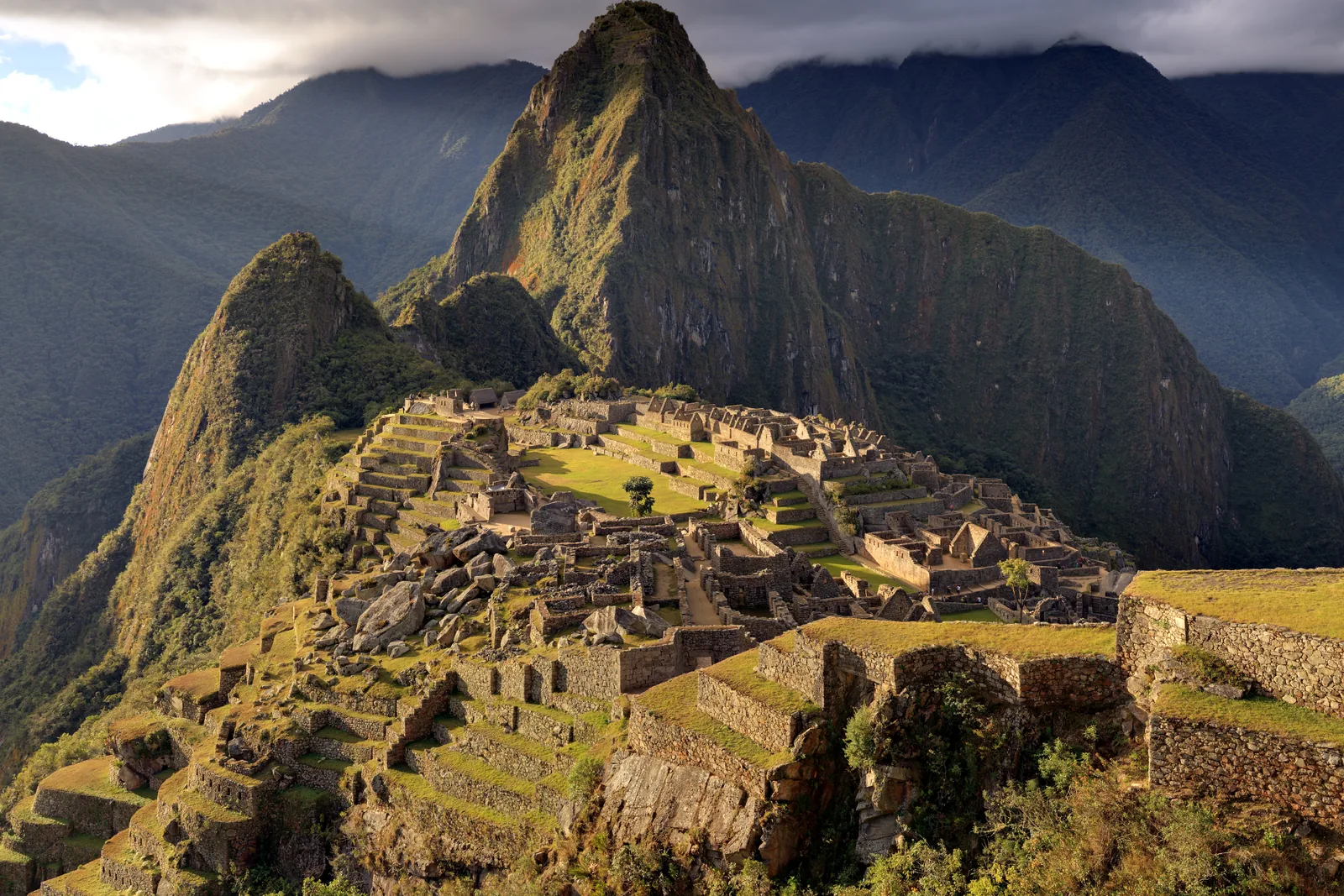
Machu Picchu from the upper terraces near the Guardian’s Hut: the main plaza with its single tree, the temple sector on the left, the residential quarters on the right, Huayna Picchu behind. Photo: Martin St-Amant (S23678), 2009, CC BY-SA 3.0, via Wikimedia Commons · Wikimedia Commons · CC BY-SA 3.0
